
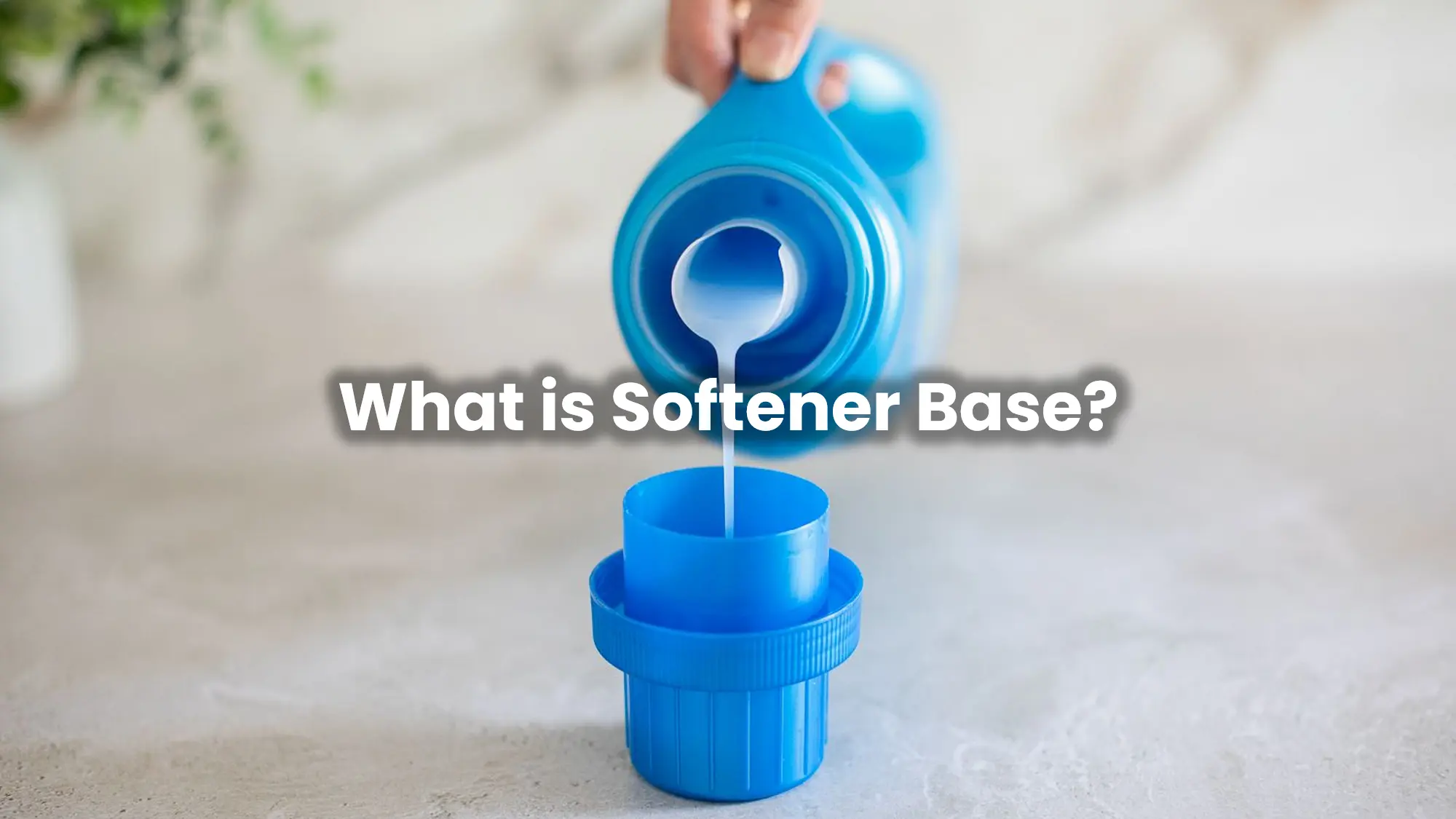
A fabric softener is commonly used after washing clothes to make fabrics feel softer, reduce static and leave a pleasant scent. The main ingredient that provides these effects is known as a softener base.
Many people recognise fabric softener as a finished product, but fewer understand the concentrated base used during manufacturing. This article explains what a softener base is, how it works, its common ingredients and why it is important in fabric softener production.
What Is a Softener Base?
A softener base is a concentrated raw material used in the production of fabric softeners. It contains the active softening agents that coat fabric fibres and improve the feel of clothing after washing.
A finished fabric softener sold to consumers is usually diluted and blended with other ingredients. A softener base, on the other hand, is not normally ready for direct use. Water and other additives are added during formulation to create the final product.
The base acts as the main performance component, while additional ingredients improve fragrance, appearance, stability and shelf life.
How Does a Softener Base Work?
During washing, detergent removes dirt, oil and residues from fabric. After this cleaning process, fabric fibres may feel rough or stiff, especially after repeated washing.
Most softener bases contain cationic surfactants, which carry a positive electrical charge. Fabric fibres often develop a slight negative charge after washing. The opposite charges attract each other, allowing the softening agents to attach to the fabric surface.
Once attached, the softening agents form a very thin lubricating layer around the fibres. This layer helps reduce friction and improves the overall feel of the fabric.
Main effects of the softening layer
- Fabrics feel softer and smoother.
- Friction between fibres is reduced.
- Static electricity is reduced.
- Clothes become easier to iron.
- Fabric flexibility improves.
- Fragrance may remain on the fabric for a longer time.
The coating is extremely thin and normally cannot be seen, but it has a noticeable effect on how the fabric feels after drying.
What Is a Softener Base Made Of?
The exact composition varies depending on the manufacturer and product design. Most softener bases contain several key components.
Common ingredients
- Cationic surfactants – the main softening agents.
- Water – used as part of the base or during dilution.
- Emulsifiers – help maintain a stable mixture.
- Stabilising agents – help prevent separation during storage.
- Processing aids – improve manufacturing performance.
Different formulations provide different levels of softness, stability, viscosity, and cost efficiency.
Why Are Cationic Surfactants Used?
Cationic surfactants are chosen for fabric softeners because they attach effectively to fabric surfaces after washing. Their positive charge allows them to bond with negatively charged fibres.
Benefits of cationic surfactants
- Excellent fabric softening
- Reduced static build-up
- Improved fabric smoothness
- Better fragrance retention
- Enhanced fabric conditioning
Fabric softener is normally added during the rinse cycle. Direct mixing with detergent is generally avoided, since anionic surfactants in detergent can reduce the effectiveness of cationic softening agents.
Common Properties of a Softener Base
A typical softener base usually has the following characteristics.
- Highly concentrated
- Thick or creamy texture
- Easily diluted with water
- Compatible with suitable fragrances and colourants
- Designed for further formulation
Concentrated bases allow manufacturers to produce large volumes of finished fabric softener from a smaller amount of raw material.
Applications of Softener Base
Fabric softener production is the main application, but softener bases are also used in several other areas.
Household fabric softeners
Manufacturers dilute the base and add fragrance, preservatives, colour and other additives before packaging the finished product for consumer use.
Commercial laundry products
Hotels, hospitals, laundries and industrial cleaning companies often use fabric softeners made from concentrated softener bases for large-scale laundry operations.
Industrial textile processing
Textile manufacturers may apply softening agents during fabric finishing to improve softness and appearance before the fabric reaches consumers.
Institutional cleaning products
Schools, healthcare facilities and commercial cleaning companies may also use fabric softeners as part of their laundry care process.
Advantages of Using a Softener Base
Consistent product quality
A well-formulated base helps produce fabric softeners with reliable softness and performance from batch to batch.
Simpler production process
Most active softening ingredients are already incorporated into the base, so manufacturing mainly involves dilution and the addition of compatible additives.
Flexible formulation
Fragrance, colour, viscosity and other product characteristics can be adjusted to suit different market needs.
Cost-effective manufacturing
Concentrated bases reduce storage and transportation requirements while allowing larger production volumes.
Can Softener Base Be Used Directly?
Direct use is generally not recommended. A softener base is designed as a raw material rather than a finished consumer product.
Use without proper dilution may lead to:
- Excessive residue on fabrics
- Uneven softening
- Poor rinsing
- Product wastage
- Higher production cost
Manufacturers normally dilute the base according to the desired final product concentration.
Typical Ingredients Added During Formulation
After dilution, several ingredients are commonly added to improve the final fabric softener.
- Fragrance – provides a pleasant scent.
- Preservatives – help prevent microbial growth.
- Colourants – improve product appearance.
- Defoaming agents – reduce unwanted foam if necessary.
- Stabilising agents – improve storage stability.
- Water – adjusts the final concentration.
The exact formulation depends on the desired product quality, target market and performance requirements.
Factors to Consider When Choosing a Softener Base
Softening performance
The base should provide good softness without leaving excessive residue on fabrics.
Dilution stability
A good softener base should remain stable after dilution and resist separation during storage.
Fragrance compatibility
Fragrance should blend well with the formulation without affecting product stability.
Viscosity
Different markets prefer different product thicknesses, so the base should allow viscosity adjustment.
Storage stability
The product should remain stable under normal storage conditions throughout its shelf life.
Common Misunderstandings About Softener Base
“Softener base is the same as fabric softener.”
This is incorrect. A softener base is a concentrated raw material used to manufacture fabric softener. Dilution and additional formulation steps are still required.
“More softener base means better softness.”
Excessive softener can leave residue on fabrics and may reduce absorbency, especially for towels and certain performance fabrics.
“Softener works like detergent.”
Detergent removes dirt and stains, while softener conditions the fabric after cleaning. Both products serve different functions.
Frequently Asked Questions
Is softener base safe for fabrics?
When formulated and used correctly, softener bases are designed to be safe for most washable fabrics.
Can softener base be used for all fabrics?
Most everyday fabrics are suitable for fabric softener. Some specialised materials, such as moisture-wicking sportswear, microfiber cleaning cloths and flame-resistant fabrics, may not be suitable.
Does softener base clean clothes?
No. A softener base does not remove dirt or stains. Its function is fabric conditioning.
Can fragrance be added to a softener base?
Yes. Fragrance is commonly added during formulation, provided it is compatible with the product.
Conclusion
A softener base is the core ingredient used in fabric softener manufacturing. It contains active softening agents that coat fabric fibres, making clothes feel softer, smoother and more comfortable after washing.
A finished fabric softener requires dilution and additional ingredients such as fragrance, preservatives, colour and stabilisers. Understanding how a softener base works helps manufacturers and product developers produce fabric care products with consistent performance, good stability and the desired user experience.
Whether used in household laundry products, commercial laundries or textile processing, a suitable softener base plays an important role in fabric conditioning and product quality.