Freshly made perfume may smell different from the final scent you expect. Many people think perfume is ready to use as soon as all the ingredients are mixed, but that is not always true. Professional perfume makers often allow the perfume to rest for a period before using or selling it. This process is known as perfume maturation.
Perfume maturation helps the fragrance become smoother and more balanced. During this resting period, the fragrance ingredients continue to blend naturally with the alcohol and other ingredients. As a result, the perfume often smells richer and more pleasant than it did immediately after mixing.
Whether you are making perfume as a hobby or producing it for commercial use, understanding perfume maturation can help you achieve a better-quality product. This article explains what perfume maturation is, why it is important, how long it should take and the factors that affect the process.
What Is Perfume Maturation?
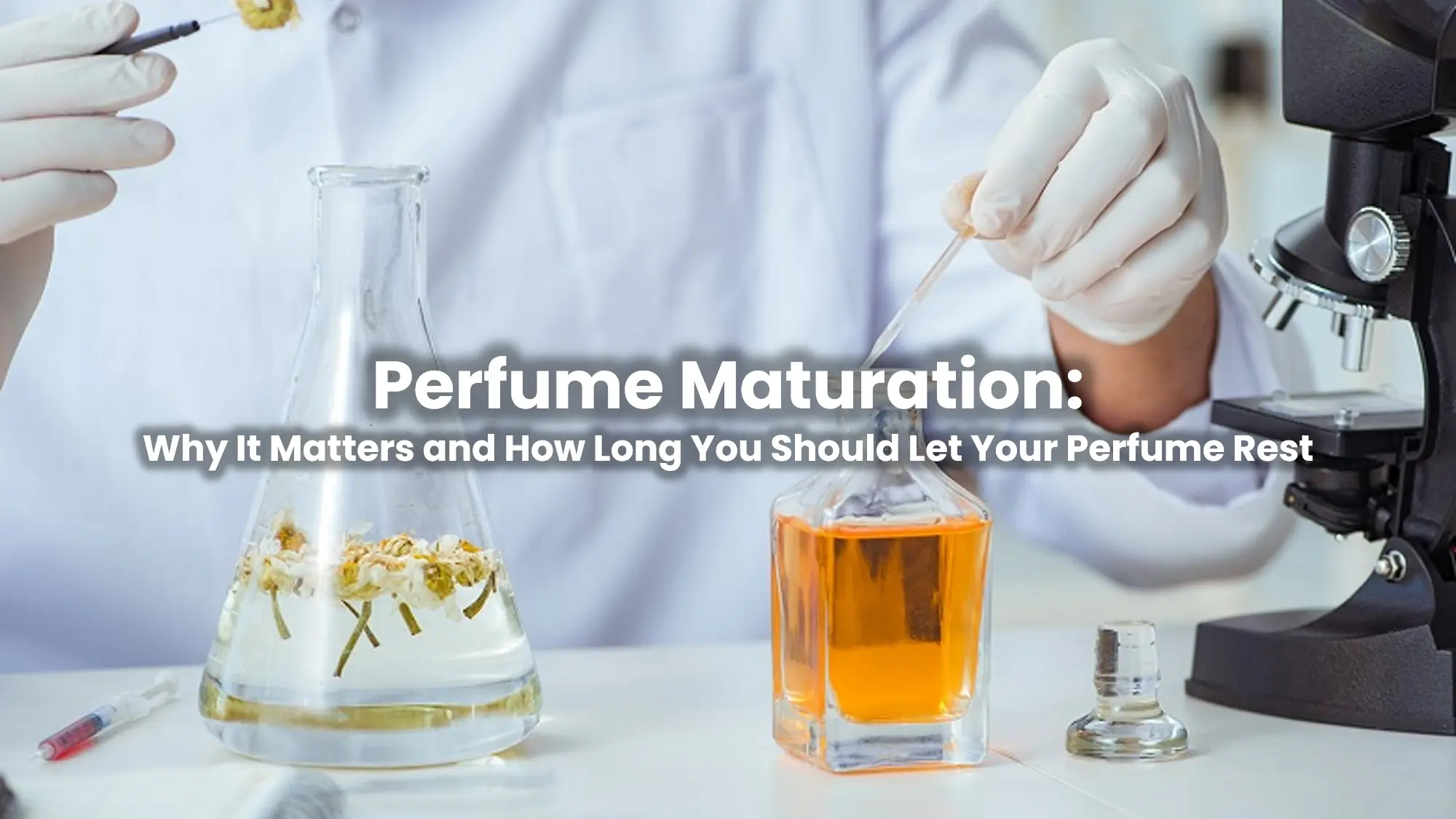
Perfume maturation is the process of allowing a freshly mixed perfume to rest for a certain period before it is filtered, bottled or used.
During this time, the fragrance oil, alcohol and any other ingredients continue to interact with one another. This is a natural process that allows the perfume composition to become more stable. The scent gradually develops into the fragrance profile intended by the perfumer.
Some people also refer to this process as aging, resting or maceration. While these terms are sometimes used interchangeably, they generally describe the period when the perfume is left undisturbed so that the ingredients can blend more completely.
Think of it like making a cup of tea. The flavour becomes more complete after the tea has steeped for a while instead of drinking it immediately after adding the tea leaves. Perfume behaves in a similar way, although the chemistry involved is much more complex.
Why Is Perfume Maturation Important?
If perfume is used immediately after mixing, the scent may not represent its true fragrance. Some notes can smell too sharp while others may be hidden.
Allowing the perfume to mature provides several benefits.
Better Blending of Fragrance Notes
A perfume contains many fragrance molecules with different evaporation rates and chemical properties. During maturation, these molecules become better integrated.
Instead of smelling like separate ingredients, the fragrance develops into one smooth and balanced scent.
Reduced Alcohol Sharpness
Freshly mixed perfumes often have a noticeable alcohol smell, especially when ethanol is used as the main solvent.
As the perfume matures, the alcohol becomes less dominant and allows the fragrance notes to stand out more naturally.
Improved Scent Balance
Top notes, middle notes and base notes begin to work together more harmoniously.
Without enough maturation time, one note may overpower the others. After proper maturation, the fragrance usually smells more rounded and complete.
Better Stability
Maturation also gives the perfume time to reach a more stable condition before bottling.
This helps reduce changes in scent after the perfume reaches the customer.
More Consistent Quality
If every batch is matured for the same period under similar conditions, the finished perfume will have more consistent quality from batch to batch.
This is especially important for commercial perfume production.
What Happens During Perfume Maturation?
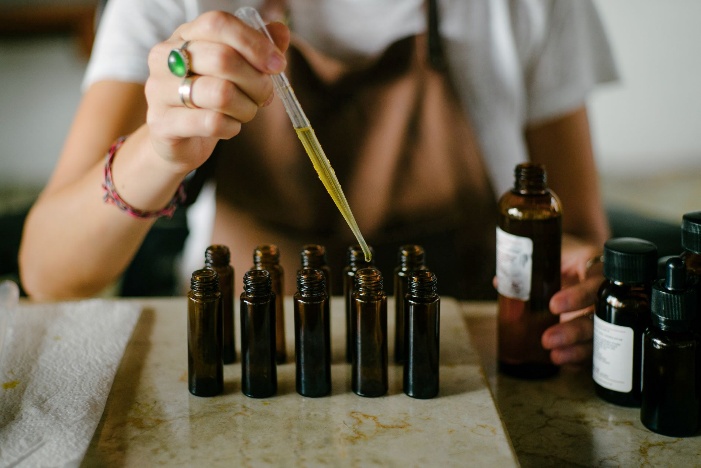
Many people wonder what actually happens while the perfume is resting.
Although no new fragrance is being added, several physical and chemical changes are taking place.
First, the fragrance oil continues to dissolve evenly throughout the alcohol.
Next, different aroma molecules slowly interact with each other. These interactions can slightly change how certain fragrance notes are perceived.
Some very volatile compounds become less dominant, making the overall fragrance smell smoother.
Tiny air bubbles created during mixing gradually disappear, resulting in a clearer solution.
The perfume also reaches a more stable equilibrium where the ingredients remain evenly distributed.
These changes happen naturally over time and contribute to a more refined fragrance.
How Long Should Perfume Mature?
One of the most common questions from beginners is how long they should let a perfume rest.
The answer depends on several factors, including the fragrance type, perfume concentration and formulation.
Below are general recommendations.
Perfume Type | Suggested Maturation Time |
Light citrus perfume | 3 to 7 days |
Floral perfume | 1 to 2 weeks |
Fruity perfume | 1 to 2 weeks |
Woody perfume | 2 to 4 weeks |
Oriental or amber perfume | 3 to 6 weeks |
Complex perfume blends | 4 to 8 weeks |
Disclaimer: The recommended maturation times in this article are provided as a general reference and guideline only. The actual maturation period depends on the fragrance composition, perfume concentration, ingredients and the desired scent profile. In many cases, allowing the perfume to mature for 1 to 2 weeks is sufficient to achieve a smoother and more balanced fragrance. It is always recommended to evaluate the perfume periodically and determine the best maturation time based on your specific formulation.
Does Every Perfume Need the Same Maturation Time?
No. Different fragrance ingredients behave differently.
For example, a simple citrus perfume with only a few fragrance components may become stable relatively quickly.
A complex perfume containing woody, resinous, musky or amber notes usually benefits from a longer maturation period because more fragrance molecules need time to integrate.
The concentration of fragrance oil also plays a role.
A perfume with a high fragrance concentration often requires a longer resting period than a lighter body mist.
Factors That Affect Perfume Maturation
Several factors influence how quickly or effectively a perfume matures.
Fragrance Composition
Complex fragrance blends usually require more time than simple fragrances.
Natural ingredients can also mature differently from synthetic aroma chemicals due to their more complex composition.
Alcohol Quality
High-purity perfume-grade ethanol provides better compatibility with fragrance oils and helps produce a cleaner finished perfume.
Impurities in the alcohol may affect the final scent.
Temperature
Moderate temperatures are generally preferred.
High temperatures may speed up unwanted chemical changes, while very low temperatures can slow the maturation process.
Light Exposure
Direct sunlight can damage certain fragrance ingredients.
Perfume should be matured in a cool, dark place whenever possible.
Container
Glass bottles are generally preferred because they are chemically resistant and do not absorb fragrance.
The container should be tightly sealed to minimise evaporation.
Should the Bottle Be Opened During Maturation?
In most cases, the answer is no.
Keeping the bottle tightly closed helps prevent evaporation of alcohol and delicate fragrance compounds.
Frequently opening the bottle also introduces fresh air, which may increase oxidation over time.
If you wish to monitor the fragrance development, it is better to prepare small test samples that can be opened without affecting the main batch.
Can Perfume Mature for Too Long?
Yes, although this usually takes much longer than the normal maturation period.
Over many months or even years, certain fragrance ingredients may slowly oxidise or degrade.
As a result, the perfume may lose some of its freshness or develop slight changes in scent.
Proper storage greatly slows this process.
Store perfume in a tightly closed bottle away from sunlight, heat and excessive humidity to help preserve its quality.
Signs That Your Perfume Has Finished Maturing
There is no exact date that applies to every perfume, but several signs indicate that the perfume is ready.
These include:
- The alcohol smell is much less noticeable.
- The fragrance smells smoother and more balanced.
- Top, middle and base notes blend naturally together.
- The scent remains consistent when tested over several days.
- The perfume appears clear after filtration, if filtration is part of the production process.
Many professional perfume makers compare samples taken at different maturation times before deciding the best resting period for a particular formula.
Can Perfume Be Used Without Maturation?
Yes, it can.
Freshly mixed perfume is generally safe to use if the formulation has been prepared correctly.
However, the fragrance may not smell as refined as it will after proper maturation.
For personal use, some people are happy to use the perfume immediately.
For commercial products where consistency and customer satisfaction are important, allowing enough maturation time is considered a good manufacturing practice.
Best Practices for Perfume Maturation
Following a few simple practices can improve the results.
- Mix the perfume thoroughly before beginning maturation.
- Store the perfume in clean, airtight glass containers.
- Keep the containers in a cool and dark location.
- Avoid frequent opening during the resting period.
- Label each batch with the mixing date.
- Test the fragrance periodically to determine the ideal maturation time.
- Filter the perfume after maturation if necessary to improve clarity.
These practices help produce a more stable and consistent finished perfume.
Common Misconceptions About Perfume Maturation
"Longer is always better."
Not necessarily.
Most perfumes reach their best scent within several weeks. Extending the maturation period beyond what the fragrance requires may not provide additional improvement.
"Every fragrance needs one month."
Different perfume formulations mature at different rates. Some light fragrances are ready within days, while more complex blends benefit from several weeks.
"Maturation makes weak perfume stronger."
Maturation does not increase the fragrance concentration.
Instead, it improves how the fragrance develops and how smoothly the different notes blend together.
Conclusion
Perfume maturation is an important step in producing a high-quality fragrance. Although it requires patience, the improvement in scent balance, smoothness and overall quality is often noticeable.
The ideal maturation time depends on the fragrance ingredients, perfume concentration and formulation. While many perfumes benefit from resting for one to four weeks, there is no single rule that applies to every fragrance. Regular evaluation is the best way to determine when a perfume has reached its optimum scent.
Whether you are making perfume for personal use or commercial production, giving the perfume enough time to mature can help create a fragrance that smells more balanced, more refined and more enjoyable to wear.