
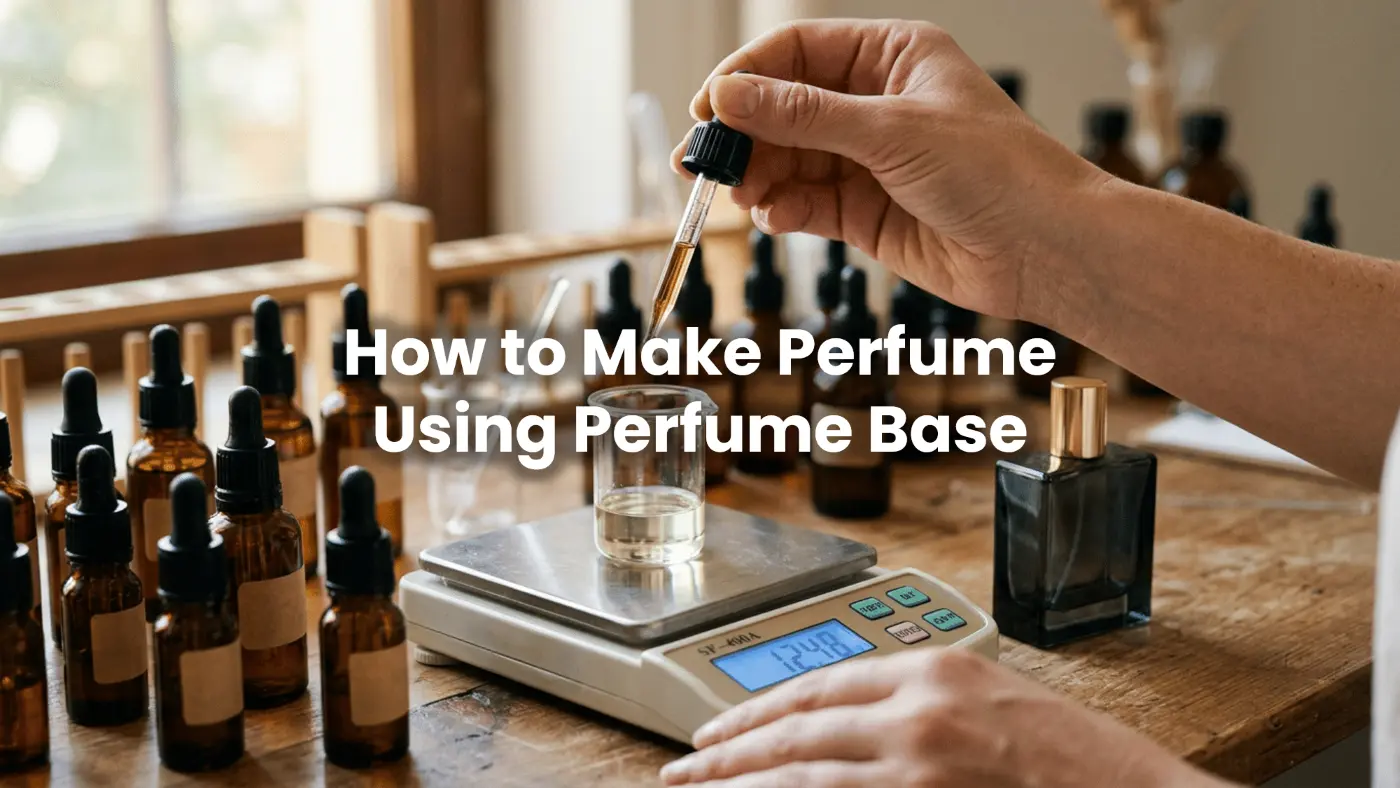
Making your own perfume is a simple way to create personalised fragrances for personal use or commercial purposes. With the availability of ready-made perfume base, the production process has become more convenient, especially for beginners and small perfume businesses.
Instead of preparing a perfume formulation from scratch, you only need two main ingredients: fragrance oil and perfume base. By adjusting the fragrance concentration, you can create perfumes with different scent strengths according to your preferences.
In this guide, we will explain how to make perfume using perfume base, including the recommended formulation ratio, step-by-step production process and useful tips for achieving a good-quality finished perfume.
What Is Perfume Base?
Perfume base is a ready-made solution designed to simplify perfume production. It acts as the main medium for blending fragrance oil and producing a finished liquid perfume.
Using perfume base eliminates the need to prepare a complete perfume formulation from scratch. This makes it suitable for beginners, perfume enthusiasts and small businesses that want to produce their own fragrances.
By combining perfume base with different fragrance oils, you can create various perfume types with different scent profiles.
Ingredients Needed to Make Perfume
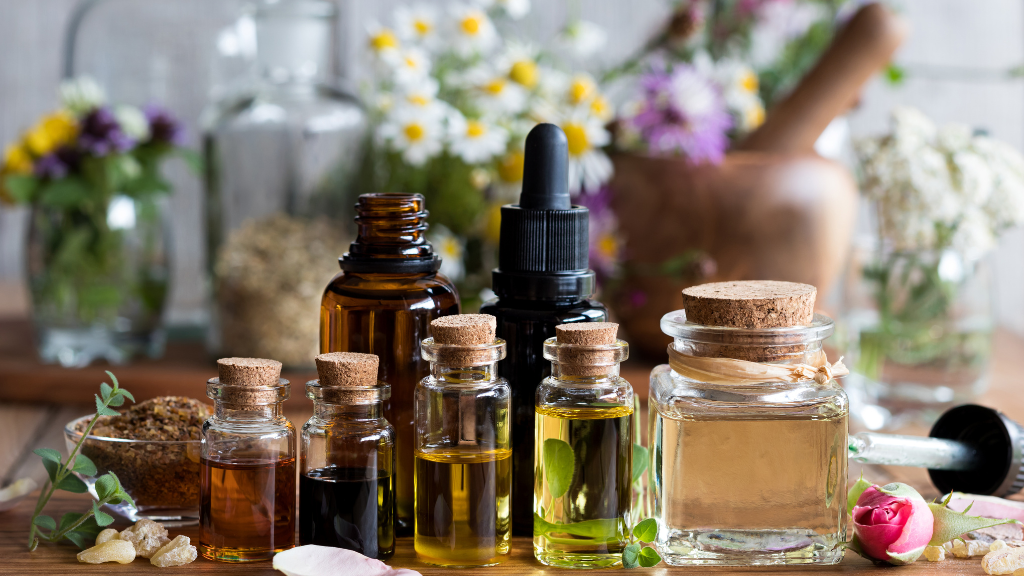
Making perfume using ready-made perfume base requires only two main ingredients.
A. Fragrance Oil
Fragrance oil provides the scent of the finished perfume. It is available in various fragrance profiles, allowing you to create different types of perfumes.
Common fragrance categories include:
- Floral: Rose, jasmine, lavender and gardenia.
- Fruity: Strawberry, peach, apple and lychee.
- Fresh: Green tea, white tea and citrus.
- Woody: Sandalwood, agarwood and oud.
- Sweet: Vanilla, cookies and chocolate.
- Oriental: Musk, ginger and cinnamon.
Choose fragrance oils suitable for fine fragrance applications, especially when producing perfume intended for skin application.
B. Perfume Base
Perfume base is the main solution used to dilute and carry the fragrance oil. It helps produce a uniform liquid perfume that can be filled into spray bottles for application.
Recommended Perfume Formulation
The fragrance oil concentration determines how much fragrance is incorporated into the finished perfume.
A general recommended formulation range is:
Ingredient | Recommended Percentage |
Fragrance Oil | 20 - 50% |
Perfume Base | 50 - 80% |
Total | 100% |
The following are some suggested starting formulations:
Fragrance Oil | Perfume Base |
20% | 80% |
25% | 75% |
30% | 70% |
35% | 65% |
40% | 60% |
50% | 50% |
How to Choose the Right Concentration?
For beginners, starting with 20 - 30% fragrance oil is recommended. This allows you to evaluate the fragrance performance before increasing the concentration.
A higher fragrance concentration does not always produce a better perfume. Some fragrance oils may become cloudy, separate or affect spray performance when used at excessive concentrations.
The ideal ratio depends on the fragrance oil composition, compatibility with the perfume base and desired fragrance characteristics.
Step-by-Step: How to Make Perfume Using Perfume Base
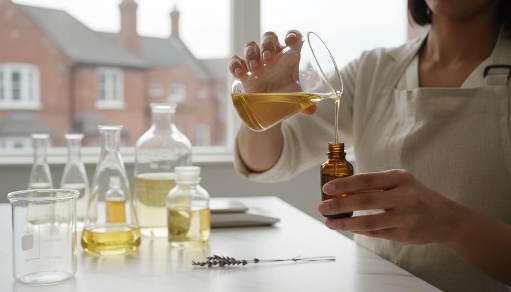
Follow these steps to prepare your own perfume.
Step 1: Prepare the Equipment
Prepare the following equipment before starting:
- Glass beaker or mixing container
- Measuring cylinder or digital weighing scale
- Glass stirring rod
- Funnel
- Perfume spray bottle
Ensure all equipment is clean and completely dry. Work in a well-ventilated area away from flames and ignition sources.
Step 2: Measure the Fragrance Oil
Decide on your preferred fragrance concentration.
For example, if you want to prepare a perfume containing 30% fragrance oil, measure 30% fragrance oil according to your total batch size.
Accurate measurement is important to ensure consistent perfume quality.
Step 3: Add the Perfume Base
Measure 70% perfume base for the same formulation.
Add it into the mixing container together with the measured fragrance oil.
Step 4: Mix Thoroughly
Stir the mixture slowly until the fragrance oil and perfume base are evenly combined.
Avoid excessive stirring, as this may introduce unnecessary air bubbles into the mixture.
Continue mixing until the perfume has a consistent appearance.
Step 5: Allow the Perfume to Rest
Transfer the mixture into a clean, tightly sealed container and allow it to rest.
This process is commonly known as perfume maceration. Resting allows the fragrance to develop and may help produce a more balanced scent profile.
A resting period of approximately 1 - 2 weeks is a practical starting point. Some formulations may require a longer period depending on their characteristics.
Store the perfume in a cool, dry place away from direct sunlight.
Step 6: Check the Finished Perfume
After the resting period, inspect the perfume before filling it into the final packaging.
Check the following:
- Appearance and clarity.
- Fragrance consistency.
- Any signs of separation or sediment.
- Spray performance.
- Changes in fragrance during storage.
If the perfume becomes cloudy or separates, the fragrance oil may not be fully compatible with the perfume base at the selected concentration.
Step 7: Transfer into Perfume Bottles
Once the perfume passes the initial quality checks, transfer it into clean and dry perfume spray bottles using a suitable funnel or filling equipment.
Close the bottles properly to minimise evaporation and contamination.
Your perfume is now ready for use, subject to the necessary safety and quality checks.
How Does Fragrance Concentration Affect Perfume Performance?
Fragrance concentration influences the overall scent strength, but it is not the only factor that determines perfume performance.
Fragrance Strength
Higher fragrance oil concentrations generally introduce more aromatic materials into the finished perfume. However, some fragrance oils naturally smell stronger than others, even when used at the same concentration.
Fragrance Projection
Projection refers to how far the fragrance can be detected from the person wearing it. It depends on the fragrance composition and evaporation characteristics, not just the amount of fragrance oil used.
Fragrance Longevity
Longevity refers to how long the perfume remains detectable after application.
Woody, musky and amber fragrances may last longer than some light citrus or fresh fragrances. The fragrance composition plays an important role in determining how quickly the scent evaporates.
Increasing fragrance concentration may improve longevity in certain formulations, but it does not guarantee that every perfume will last longer.
Common Problems When Making Perfume
Some formulation issues may occur during perfume production. Understanding their possible causes can help improve the finished product.
Problem | Possible Cause | Suggested Solution |
Cloudy perfume | Poor compatibility or excessive fragrance concentration | Reduce fragrance concentration and retest |
Separation | Fragrance oil is not fully compatible with the base | Test a lower concentration |
Strong or overpowering scent | Fragrance concentration is too high | Reduce fragrance oil percentage |
Weak fragrance | Fragrance composition or concentration may be unsuitable | Test a different concentration |
Colour changes | Exposure to light, heat or oxidation | Use suitable packaging and storage conditions |
Always prepare small test batches when working with a new fragrance oil before proceeding with larger production quantities.
Tips for Producing Better Quality Perfume
Here are several useful recommendations for improving your perfume-making process.
1. Choose Suitable Fragrance Oils
Select fragrance oils intended for fine fragrance applications. For skin-applied perfumes, check the recommended usage limits and relevant IFRA documentation.
2. Start with a Lower Concentration
Begin with 20 - 25% fragrance oil and gradually increase the concentration if necessary. This helps you identify the most suitable ratio.
3. Use Suitable Packaging
Glass perfume spray bottles are commonly used for perfume packaging. Ensure that the bottle, spray pump and other components are compatible with the finished formulation.
4. Store Properly
Keep finished perfume in tightly sealed containers away from direct sunlight, excessive heat and unnecessary exposure to air.
5. Maintain Formulation Records
Record the fragrance oil used, concentration, mixing date and test results. This helps maintain consistency when producing the same perfume in future batches.
Frequently Asked Questions (FAQ)
Q1: Can I mix fragrance oil directly with perfume base?
Yes. Perfume base is designed to simplify perfume production. You can combine it directly with suitable fragrance oil according to the recommended formulation ratio.
Q2: What is the best fragrance concentration for perfume?
A concentration of 20 - 30% is a practical starting point. You can increase it up to 50% if the fragrance oil and perfume base are compatible and the finished product remains stable and suitable for its intended use.
Q3: Do I need to add extra ingredients when using perfume base?
Generally, no. A ready-made perfume base is intended to simplify the production process. Additional ingredients should only be introduced when necessary and after compatibility testing.
Q4: How long should I leave perfume to mature?
A resting period of 1 - 2 weeks is a practical starting point. Some formulations may benefit from longer resting periods.
Q5: Why does my perfume become cloudy?
Cloudiness may occur when the fragrance oil is not fully compatible with the perfume base. Try reducing the fragrance concentration and preparing another test batch.
Q6: Can I use 50% fragrance oil and 50% perfume base?
Yes, this ratio can be tested. However, not every fragrance oil is suitable for such a high concentration. Check the clarity, stability, spray performance and applicable fragrance safety limits before use.
Q7: Can perfume base be used to make room spray or car perfume?
Not necessarily. Perfume base intended for skin-applied perfume may not be suitable for room spray or car perfume. Different applications require suitable bases and compatibility testing.
Conclusion
Making perfume using ready-made perfume base is a convenient way to produce personalised fragrances without preparing a complete formulation from scratch.
By combining fragrance oil and perfume base at a suitable ratio, you can create different perfume variations according to your desired scent strength.
A formulation containing 20 - 50% fragrance oil and 50 - 80% perfume base provides a useful starting range for perfume development. However, the ideal concentration depends on fragrance compatibility, desired performance and product stability.
For beginners, starting with 20 - 30% fragrance oil is recommended. With proper measurement, mixing and quality testing, you can develop a consistent perfume formulation suitable for personal use or commercial production.