
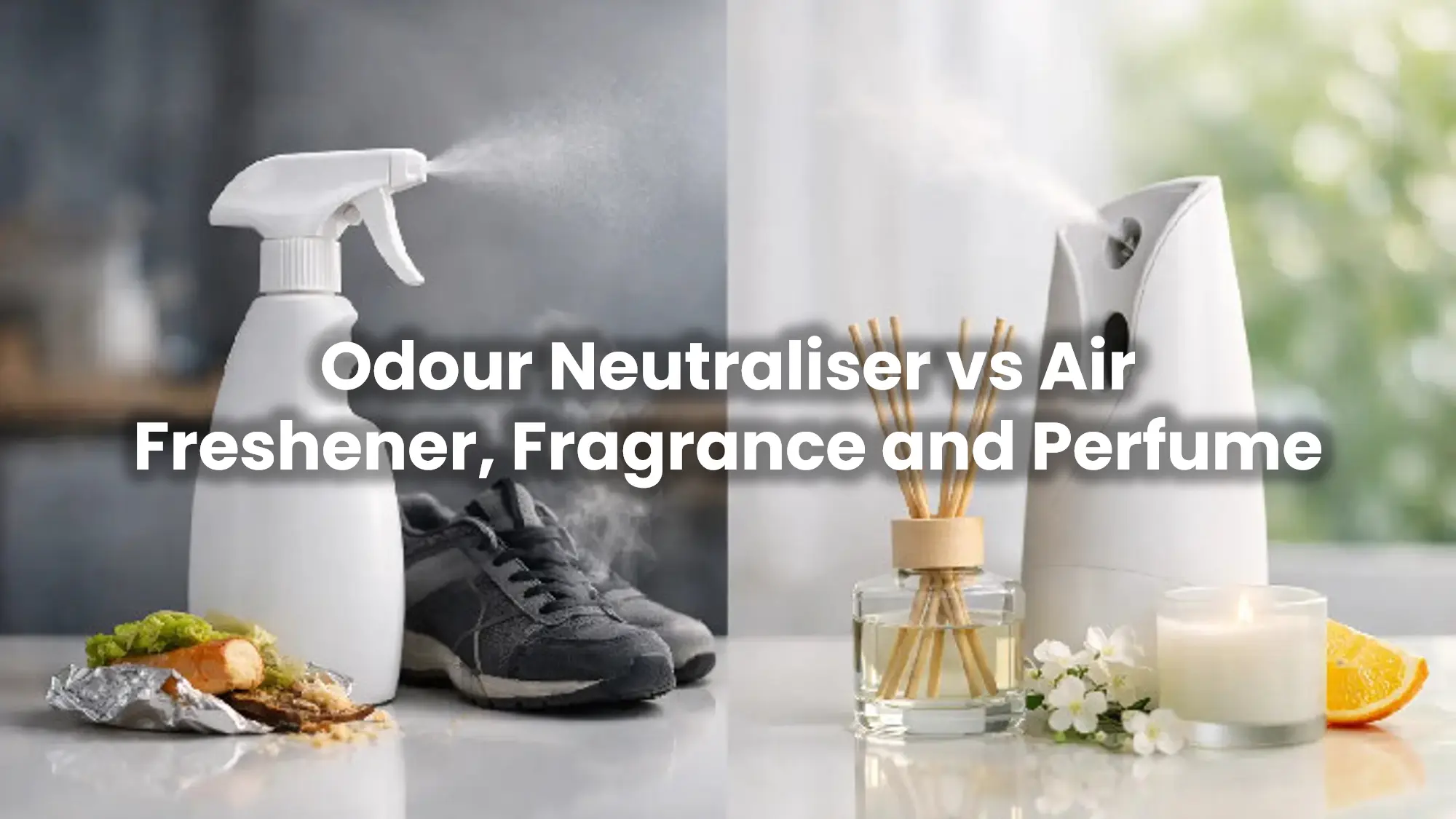
Unpleasant smells can affect the comfort of a home, vehicle, workplace or commercial environment. Many people use air fresheners, fragrance or perfume to improve the smell but these products do not always address the source of the problem. This is where an odour neutraliser can be useful.
Although these products are related to scent, they serve different purposes. Some are designed to reduce unwanted odours, while others mainly add a pleasant smell. Understanding these differences helps consumers and manufacturers choose suitable ingredients for cleaning products, laundry detergents, room sprays, car care products and other applications.
What Is an Odour Neutraliser?
An odour neutraliser is a substance or formulated product designed to reduce unpleasant smells rather than simply cover them with fragrance.
Bad smells can come from various sources, including sweat, food waste, pets, drains, damp materials and cooking. These sources may release odour-causing compounds into the air. An odour neutraliser works by interacting with certain compounds, binding or trapping them or reducing their ability to produce a noticeable smell. The exact mechanism depends on the ingredients used.
For example, an odour neutraliser formulated for laundry products can help reduce unwanted smells that remain on clothing after washing. Similarly, a suitable neutraliser in a carpet cleaner can help control unpleasant odours associated with carpets and upholstery.
However, not every odour neutraliser works equally well against all types of smells. Its performance depends on the formulation, the odour source and the application method.
What Is an Air Freshener?
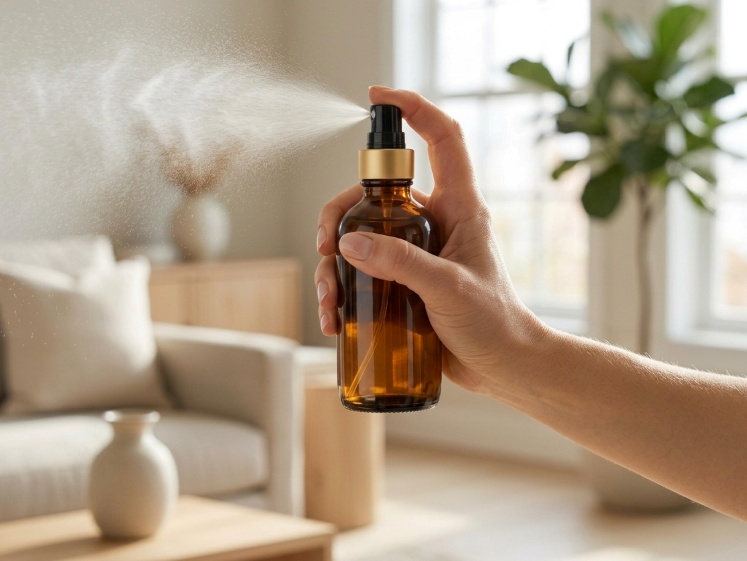
An air freshener is a product designed mainly to make the surrounding air smell pleasant. It is commonly used in homes, offices, bathrooms, hotels and vehicles.
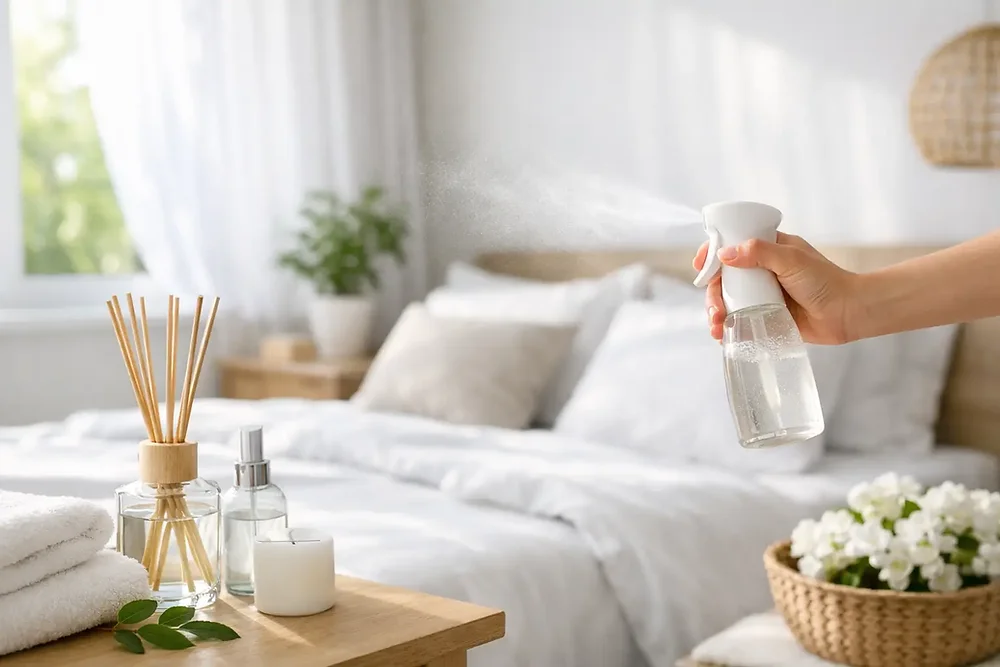
Air fresheners are available in different forms, including sprays, gels, reed diffusers and electric diffusers. These products release fragrance into the surrounding environment at different rates.
Most conventional air fresheners improve the smell of a space by introducing a pleasant scent. Some products also contain ingredients that help control unwanted odours but this depends on their formulation.
For example, a floral air freshener may make a room smell more pleasant after cooking. However, the original cooking odour may remain if the product only adds fragrance without addressing the odour-causing compounds.
Therefore, an air freshener is suitable when the main objective is to create a pleasant-smelling environment, while an odour neutraliser may be more appropriate when reducing unpleasant smells is the priority.
What Is Fragrance?
Fragrance refers to a blend of aromatic ingredients used to give a product or environment a particular smell. These ingredients may be natural, synthetic or a combination of both.
In chemical manufacturing, fragrance is commonly used as a raw material in products such as laundry detergents, fabric softeners, cleaning liquids, room sprays, candles and personal care products.
Different fragrances can create floral, fruity, woody, fresh, sweet or herbal scent profiles.
The main purpose of fragrance is to provide a desired smell. For example, a fresh laundry fragrance can give clothes a clean-smelling finish, while a citrus fragrance may be used in a household cleaner to create a fresh scent during use.
However, fragrance does not automatically neutralise unpleasant odours. It may mask an unwanted smell, but the odour-causing compounds can remain present.
Manufacturers should also check fragrance compatibility with the formulation. Some fragrances may require a suitable solvent or solubiliser to disperse properly in water-based products.
What Is Perfume?
Perfume is a finished fragrance product designed mainly for personal scenting. It commonly contains fragrance ingredients blended with a suitable carrier, such as ethanol or another appropriate base.
Examples of perfume products include Eau de Parfum (EDP), Eau de Toilette (EDT), Eau de Cologne (EDC) and body mist. These products differ in their formulations, fragrance concentrations and intended uses.
Perfume is designed to provide a pleasant scent when applied according to the product instructions. It is not generally formulated to neutralise unwanted odours.
For example, spraying perfume onto clothing that retains a strong sweat smell may create a mixture of perfume and sweat odours. Cleaning the clothing and using a suitable odour-control product may be more effective than applying additional perfume.
What Is the Difference Between Odour Neutraliser, Air Freshener, Fragrance and Perfume?
Product | Main function | Common applications |
Odour neutraliser | Reduces unwanted smells | Laundry products, carpet cleaners, pet care products and odour-removal sprays |
Air freshener | Makes the surrounding air smell pleasant | Homes, offices, bathrooms and vehicles |
Fragrance | Adds a chosen scent to a product | Detergents, fabric softeners, cleaners and personal care products |
Perfume | Provides a pleasant personal scent | Personal fragrance products and body mists |
The key difference is that an odour neutraliser focuses on odour control, while fragrance and perfume focus on adding a desired scent. An air freshener mainly delivers fragrance into the air, although some formulations also provide odour-control benefits.
Why Is an Odour Neutraliser Used in Chemical Formulations?
An unpleasant smell can affect how people judge a product, even when the product performs its main function well. For example, a detergent may clean clothes effectively, but customers may remain dissatisfied if the clothes retain sweat odours after washing.
Adding more fragrance is not always the best solution. A stronger scent may cover the unwanted smell temporarily without reducing its source.
An odour neutraliser can help manufacturers develop products that address unwanted odours more directly.
Common applications include:
- Laundry detergents and fabric softeners: Help control unwanted smells associated with clothing and fabrics.
- Carpet and upholstery cleaners: Support odour control during fabric and surface cleaning.
- Room and fabric sprays: Help reduce unwanted smells in suitable indoor environments or on compatible fabrics.
- Pet care products: Help control certain odours associated with pets and their surroundings.
- Bathroom and surface cleaners: Support odour control when used alongside suitable cleaning methods.
- Car care products: Help reduce unwanted smells in vehicle interiors and on suitable surfaces.
The selected neutraliser must be suitable for the intended application. Compatibility, safety, stability and performance should be evaluated before commercial use.
Can an Odour Neutraliser Be Mixed with Fragrance?
Yes. An odour neutraliser and fragrance can be combined in a suitable formulation when both odour control and a pleasant scent are desired.
For example, a laundry detergent may contain an odour neutraliser to help reduce unwanted smells and a fragrance to give washed clothes a pleasant scent. A carpet cleaner may use the same approach to control unpleasant odours while leaving a fresh smell after cleaning.
However, manufacturers should check several factors before combining these ingredients:
- Compatibility: Ensure the ingredients work well together without causing separation or other unwanted changes.
- Appearance: Check for cloudiness, sediment or changes in colour.
- Scent quality: Confirm that the fragrance remains pleasant and suitable for the finished product.
- Performance: Test whether the formulation reduces the target odour rather than simply making it less noticeable.
- Safety and intended use: Confirm that the finished product is suitable for the surfaces or materials where it will be applied.
Not every fragrance or perfume can be mixed directly with every odour neutraliser. The correct method depends on the ingredients and the complete formulation.
How Much Odour Neutraliser Should Be Added?
The appropriate amount depends on the type of product, the strength of the unwanted odour and the neutraliser being used.
Application | Suggested dosage by weight |
Laundry detergent | 1-3% |
Carpet and upholstery cleaner | 1-3% |
Room and fabric odour-removal spray | 2-5% |
Pet odour products | 2-5% |
These levels are product-specific and should not be applied to every odour neutraliser.
For example, a 1,000 g batch using 3% neutraliser requires 30 g of the ingredient. The remaining ingredients should be adjusted to reach the intended total batch weight.
The final dosage should be confirmed through practical testing and the supplier's technical guidance. A higher dosage does not always produce a better result.
How to Add an Odour Neutraliser to a Formulation
For the water-based neutraliser, the basic procedure is as follows:
Step 1: Prepare the base. Prepare the water or main formulation according to the normal manufacturing procedure.
Step 2: Add the neutraliser. Add the recommended amount while mixing. The neutraliser can be added to water and stirred without heating.
Step 3: Mix until uniform. Continue stirring until the ingredient is evenly distributed throughout the formulation.
Step 4: Add other ingredients. Add fragrance, colourants and other ingredients at the appropriate stages, following the formulation requirements.
Step 5: Check the finished product. Inspect its appearance, scent, stability and odour-control performance.
The procedure may differ for other neutralisers, so always follow the relevant technical instructions.
How to Choose a Suitable Odour Neutraliser
When selecting an odour neutraliser, manufacturers should consider more than its ability to reduce a particular smell.
- Water compatibility: Important for many water-based detergents and household cleaners.
- Low-foam performance: Useful in applications where excessive foam may affect use or rinsing.
- No unwanted staining: Important for products applied to fabrics, carpets and upholstery.
- Fragrance compatibility: Necessary when the finished product must also provide a pleasant scent.
- Stability: The formulation should remain suitable during storage.
- pH compatibility: The neutraliser should work within the intended formulation's pH range.
Frequently Asked Questions
Is an odour neutraliser the same as an air freshener?
No. An odour neutraliser is designed to reduce unwanted smells, while a conventional air freshener mainly adds fragrance to the surrounding air. Some products combine both functions.
Does fragrance remove bad smells?
Not automatically. Fragrance adds a desired scent but does not necessarily reduce the compounds responsible for unpleasant odours.
Can perfume replace an odour neutraliser?
Generally, no. Perfume is designed for personal scenting rather than odour control. It may cover an unwanted smell without addressing its source.
Can an odour neutraliser be used without fragrance?
Yes. An odour neutraliser can be used in an unscented formulation when the objective is to control unpleasant smells without adding another scent.
Does an odour neutraliser kill bacteria?
Not necessarily. Odour control and antimicrobial activity are different functions. Antimicrobial claims require suitable supporting evidence.
Will an odour neutraliser remove every type of bad smell?
No. Its performance depends on the target odour and the formulation. Some situations also require cleaning, ventilation or removal of the original source.
Conclusion
Odour neutraliser, air freshener, fragrance and perfume serve different purposes. An odour neutraliser is designed to reduce unwanted smells, while an air freshener mainly makes the surrounding air smell pleasant. Fragrance provides a desired scent to a formulation, while perfume is intended primarily for personal scenting.
For manufacturers, understanding these differences helps in selecting suitable raw materials and developing products that meet specific needs. Fragrance and odour neutralisers can also be combined when a product needs to control unpleasant smells and provide a pleasant scent.
The most suitable choice depends on the intended result: use fragrance to add scent, consider an air freshener to improve the smell of a space and select a suitable odour neutraliser when reducing unwanted odours is the main objective.