
Chemical powders are used in many industries, including cleaning products, detergents, cosmetics, agriculture, construction, food processing and chemical manufacturing. When stored correctly, most powders should remain relatively dry, free-flowing and easy to handle.
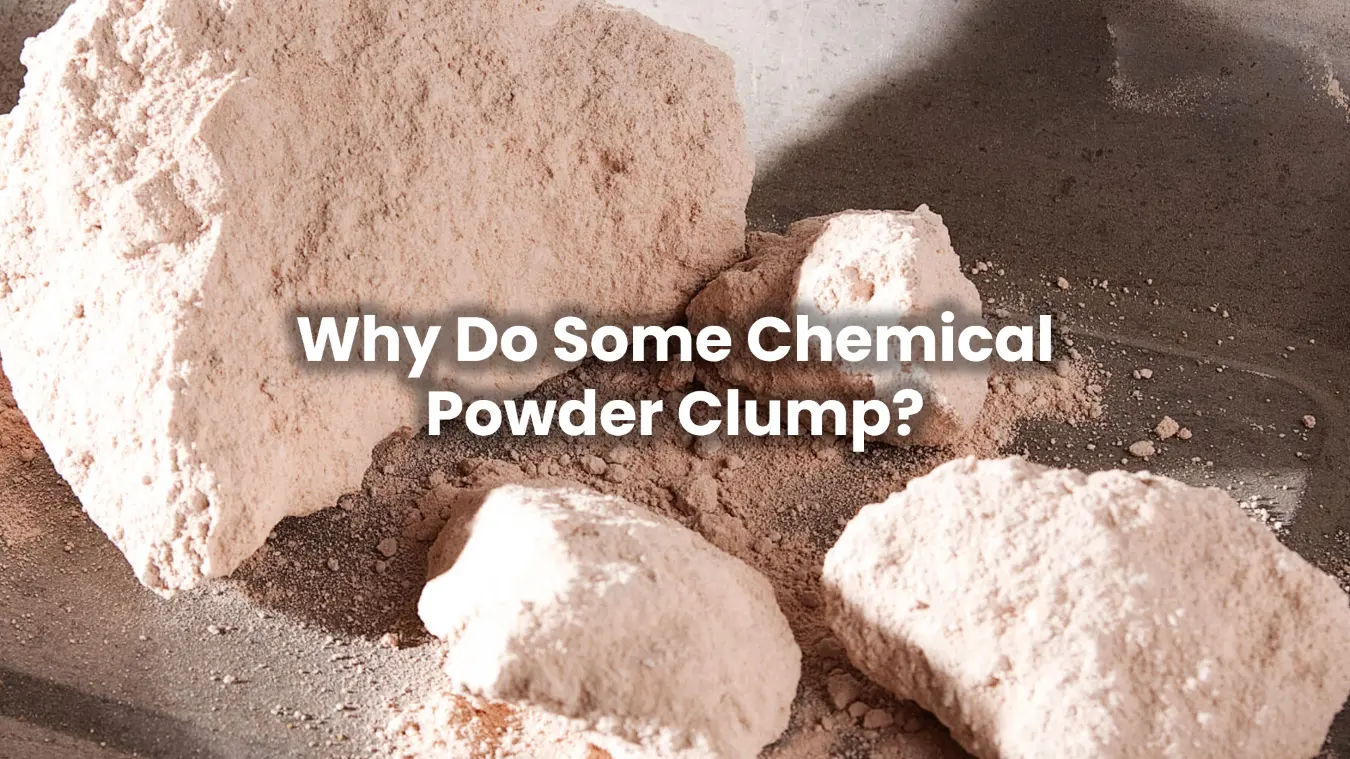
However, some powders may become lumpy or form hard masses during storage. This is commonly known as powder clumping or caking.
Why does this happen? A powder does not need to come into direct contact with liquid water to become unstable. Humidity, temperature, particle properties, pressure, packaging, chemical composition and storage time can all affect powder stability.
Understanding these factors can help users identify why a powder is clumping and how to reduce the problem.
What Is Powder Clumping?
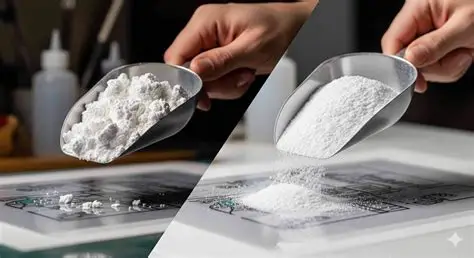
Powder clumping occurs when individual particles stick together and form larger groups or lumps.
A free-flowing powder normally contains many separate particles:
Individual particles → Free-flowing powder
Under certain conditions, particles begin to stick together:
Individual particles → Small lumps → Larger lumps → Hard cake
Some clumps are soft and can easily be broken apart. Others may become hard and compact, making the powder difficult to pour, weigh, mix or dissolve.
Clumping is not always a sign that the chemical has become unusable. In some cases, it is mainly a physical change caused by storage conditions. However, the cause should be identified before deciding whether the material is suitable for use.
7 Factors That Affect Powder Stability
1. Moisture and Humidity
Moisture is one of the most common causes of powder clumping.
Some chemical powders are hygroscopic, meaning they can absorb water vapour from the surrounding air. This can happen even when there is no visible water around the material.
When a powder absorbs moisture, its particle surfaces can become slightly sticky. Water may also form small liquid bridges between particles, causing them to adhere to one another.
Over time:
Moisture absorption → Particle adhesion → Lumps → Caking
High relative humidity can make this problem worse, especially for moisture-sensitive powders.
For example, a bag may be opened in a humid production area and then loosely closed after use. The remaining powder can gradually absorb moisture from the air and become increasingly difficult to flow.
How to reduce the risk:
- Keep packaging tightly sealed.
- Minimise exposure to humid air.
- Store powders in a dry area.
- Avoid placing bags directly on wet floors.
- Close partially used packaging immediately after use.
- Follow the recommended storage conditions for the material.
2. Temperature
Temperature can also affect powder stability.
High temperatures may increase moisture movement and depending on the chemical, can soften the surface of particles. Some materials may become more adhesive when exposed to excessive heat.
Temperature changes can also be important.
For example:
Cool → Hot → Cool → Hot
Repeated changes may cause moisture to move within the packaging and under certain conditions, contribute to condensation or moisture redistribution.
This is why a powder may remain stable in a controlled warehouse but develop clumps when stored in a hot area with large temperature fluctuations.
Good practice includes:
- Avoid direct sunlight.
- Keep powders away from hot machinery.
- Avoid excessive heat.
- Minimise large temperature changes.
- Follow the manufacturer's recommended storage temperature.
3. Particle Size and Particle Shape
The physical characteristics of a powder can strongly affect its flow and stability.
Fine powders have a larger total surface area compared with coarse particles of the same weight. More surface area means more opportunity for particles to interact with moisture and with each other.
However, fine powder does not automatically mean that the material will clump. Its chemical properties and surface characteristics are also important.
Particle shape matters too. Irregular particles can have more points of contact and may interlock with one another. Different particle sizes can also pack together more tightly during transportation or storage.
This can result in:
Particle movement → Tighter packing → More particle contact → Greater risk of caking
Therefore, particle size distribution is an important consideration when evaluating powder flowability.
4. Pressure and Storage Conditions
Pressure can contribute to caking, particularly when powders are stored in large bags or stacked containers.
When bags are stacked, the weight of the upper bags creates pressure on the lower bags. This compresses the particles and increases the contact between them.
Over time:
Compression → Closer particle contact → Stronger particle bonding
Transportation can also contribute. Vibration during transport may cause particles to settle and become more tightly packed.
This explains why a powder that was loose when packed may become denser or more compact after transportation.
To reduce pressure-related caking:
- Follow recommended stacking limits.
- Avoid excessive stacking height.
- Store bags properly on pallets.
- Minimise unnecessary compression.
- Consider transportation and vibration when evaluating the condition of the powder.
5. Chemical Composition and Hygroscopicity
Different chemicals naturally have different levels of moisture sensitivity.
A highly hygroscopic powder can absorb moisture much more easily than a relatively moisture-resistant powder.
This means two different powders stored in the same warehouse can behave very differently.
Some materials may also react with moisture, oxygen or other substances in the environment. Such reactions can change the physical or chemical properties of the material.
It is therefore important to distinguish between:
Physical caking: particles stick together but the chemical may remain within specification.
Chemical deterioration: the chemical undergoes a reaction or degradation that changes its properties.
The appropriate assessment depends on the specific chemical and its intended application.
6. Packaging and Exposure to Air
Packaging provides a barrier between the powder and the surrounding environment.
If packaging does not provide enough protection from moisture, the powder may gradually absorb water during storage.
Repeated opening can also introduce humid air.
For example:
- A bag is opened.
- Some powder is removed.
- The remaining powder is loosely closed.
- Humid air enters.
- The powder absorbs moisture.
- Clumping gradually develops.
Even if the powder was originally supplied in good condition, poor handling after opening can affect its stability.
For moisture-sensitive materials, suitable moisture-resistant packaging and proper sealing are particularly important.
7. Storage Time and Environmental Changes
Long storage does not automatically cause clumping, but it gives more time for environmental factors to affect the powder.
During storage, a powder may experience repeated:
- Humidity changes
- Temperature changes
- Vibration
- Compression
- Exposure to air
- Opening and closing of packaging
A small amount of moisture absorbed over a long period can eventually become significant.
Using a suitable inventory system such as FIFO (First In, First Out) can help reduce unnecessary long-term storage, while always following the applicable shelf-life requirements of the material.
What Is the Difference Between Clumping and Caking?
The terms are often used interchangeably, but they can describe different levels of powder aggregation.
Clumping usually refers to smaller groups of particles sticking together. The lumps may still be relatively soft and easy to break.
Caking generally refers to stronger aggregation where the powder forms a hard, compact mass.
The progression may look like:
Free-flowing powder → Small lumps → Larger lumps → Hard cake
The severity depends on the chemical and the storage conditions.
Does Clumping Mean the Chemical Has Gone Bad?
Not necessarily.
A powder may become physically clumped because of moisture absorption, compression or changes in temperature while its chemical composition remains within specification.
However, clumping can sometimes occur together with chemical deterioration. Therefore, it is important not to assume that every clumped powder is either safe or unusable based only on appearance.
Depending on the chemical, evaluation may include:
- Appearance
- Moisture content
- Purity or assay
- pH
- Solubility
- Particle size
- Bulk density
- Flow properties
The appropriate tests depend on the specific material and its application.
How Can Chemical Powder Clumping Be Reduced?
A good powder storage strategy should address several factors at the same time.
Control Moisture
Keep powders away from water and excessive humidity. Close opened packaging as soon as possible.
Control Temperature
Avoid excessive heat, direct sunlight, and large temperature fluctuations.
Use Suitable Packaging
Select packaging that provides an appropriate barrier against moisture and environmental exposure.
Manage Stacking
Avoid excessive compression, particularly for powders that are sensitive to caking.
Minimise Air Exposure
Do not leave bags or containers open unnecessarily during production.
Manage Inventory
Avoid unnecessarily long storage and follow the recommended shelf-life requirements.
Follow Storage Recommendations
Different chemicals have different storage requirements, so the supplier's technical information and Safety Data Sheet should be used as the main reference.
A Simple Powder Clumping Troubleshooting Checklist
When a chemical powder starts to clump, ask:
Was it exposed to humidity?
Check whether the packaging was opened, damaged or stored in a humid area.
Was it exposed to heat?
Check for direct sunlight, hot machinery or high storage temperatures.
Was it compressed?
Check stacking height and whether the material was stored under heavy loads.
Did it experience transportation vibration?
Powder can settle and become more compact during transportation.
Is the chemical hygroscopic?
Check its technical information for moisture sensitivity.
Was the packaging properly sealed?
Look for damaged bags, loose closures or repeated exposure to air.
Has it been stored for a long time?
Compare the storage period with the recommended shelf life and storage conditions.
Conclusion
Chemical powder clumping occurs when particles stick together and form larger lumps. The problem can be influenced by several factors rather than a single cause.
The 7 main factors affecting powder stability are:
- Moisture and humidity
- Temperature
- Particle size and particle shape
- Pressure and storage conditions
- Chemical composition and hygroscopicity
- Packaging and exposure to air
- Storage time and environmental changes
Good powder handling starts with proper storage. Controlling humidity, temperature, packaging, stacking, air exposure and storage time can help maintain powder flowability and stability.
Most importantly, a clumped powder is not automatically a chemically degraded powder. The cause and condition of the material should be assessed based on its specific properties and applicable specifications before use.