
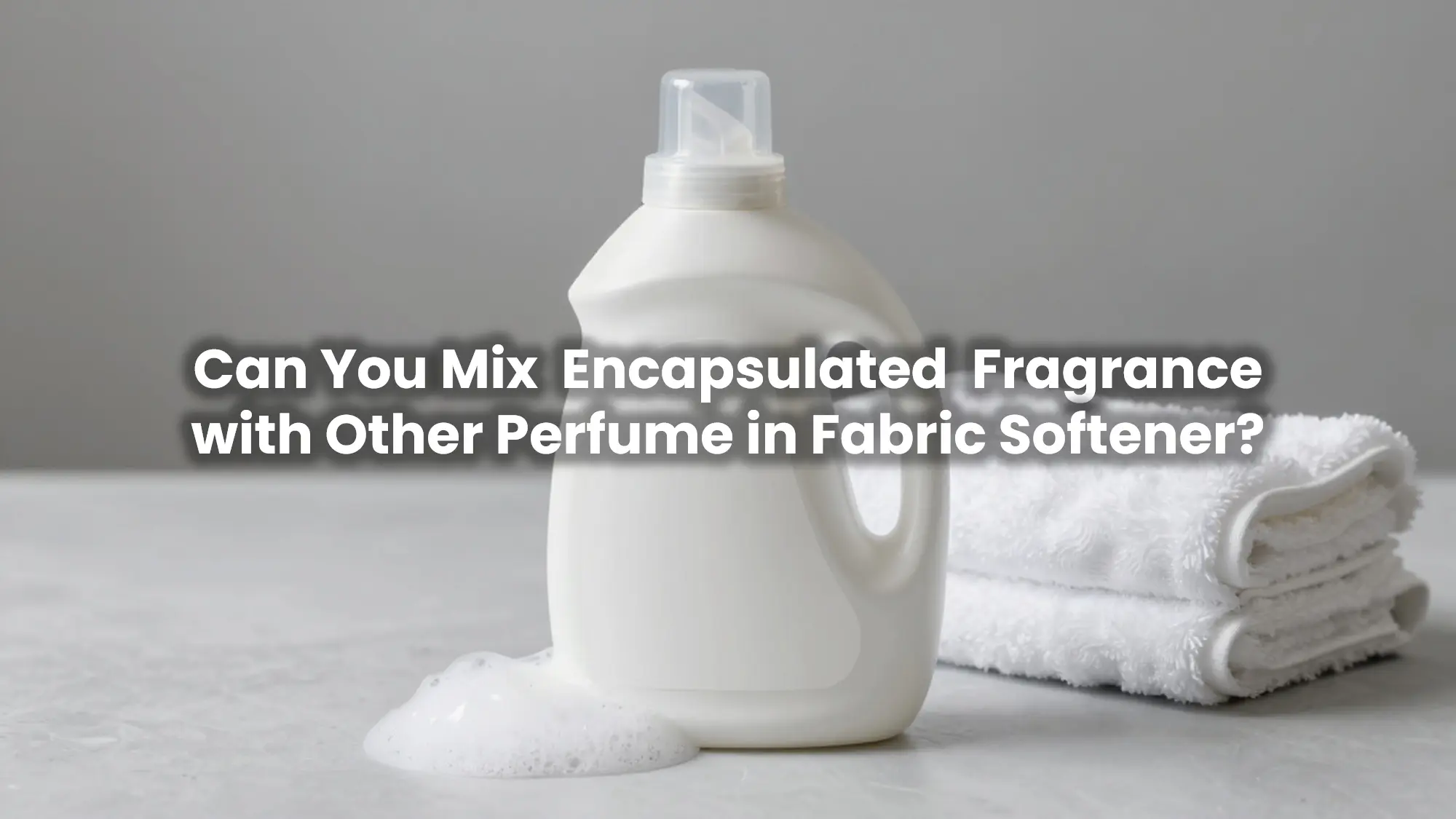
Fabric softener is used to make clothes feel softer and give them a pleasant fragrance. Traditional fabric softeners use fragrance oil to provide the desired scent. However, some formulators want the fragrance to last longer after washing, drying and wearing.
This is where encapsulated fragrance can be useful.
A common question is: Can encapsulated fragrance be mixed with another perfume or fragrance oil when making fabric softener?
Yes, encapsulated fragrance can often be used together with regular fragrance oil, provided that both materials are suitable for the application and compatible with the formulation. However, they work differently, so the mixing process and product stability must be considered carefully.
What Is Encapsulated Fragrance?
Encapsulated fragrance is a fragrance system in which fragrance materials are enclosed inside very small protective capsules. These capsules are designed to protect the fragrance and release it under certain conditions.
During washing, some capsules may deposit onto fabric fibres. After the fabric dries, the capsules can remain on the fibres. Fragrance may then be released when the capsules are broken by friction, movement or other conditions.
For example, a shirt may smell fresh immediately after washing. Later, when the shirt is worn and the fabric moves or rubs against another surface, fragrance from the capsules may be released.
This makes encapsulated fragrance useful for products designed to provide a longer-lasting fragrance experience.
Regular Fragrance Oil vs Encapsulated Fragrance
Although both materials provide fragrance, they serve different purposes.
Feature | Regular Fragrance Oil | Encapsulated Fragrance |
Fragrance release | Mainly provides an immediate scent | Designed for more controlled fragrance release |
Main purpose | Gives the product its fragrance profile | Helps extend the fragrance experience |
Physical form | Fragrance liquid | Fragrance contained in capsules |
Fabric application | Provides fragrance after washing | May release fragrance through friction or movement |
Processing | Generally straightforward to incorporate | Requires careful handling to protect the capsules |
Understanding these differences helps formulators decide how to combine the two materials effectively.
Can You Mix Both in Fabric Softener?
Yes. Regular fragrance oil and encapsulated fragrance can be used together in a fabric softener formulation when they are compatible with the selected softener base.
For example, a fabric softener may contain a softening agent, regular fragrance oil, encapsulated fragrance, preservative, water and other supporting ingredients.
The regular fragrance provides the desired initial scent, while the encapsulated fragrance can provide an additional fragrance-release mechanism.
However, compatibility is important. The formulation should remain stable, and the capsules should retain their intended function after mixing and storage.
Why Use Both Fragrance Types?
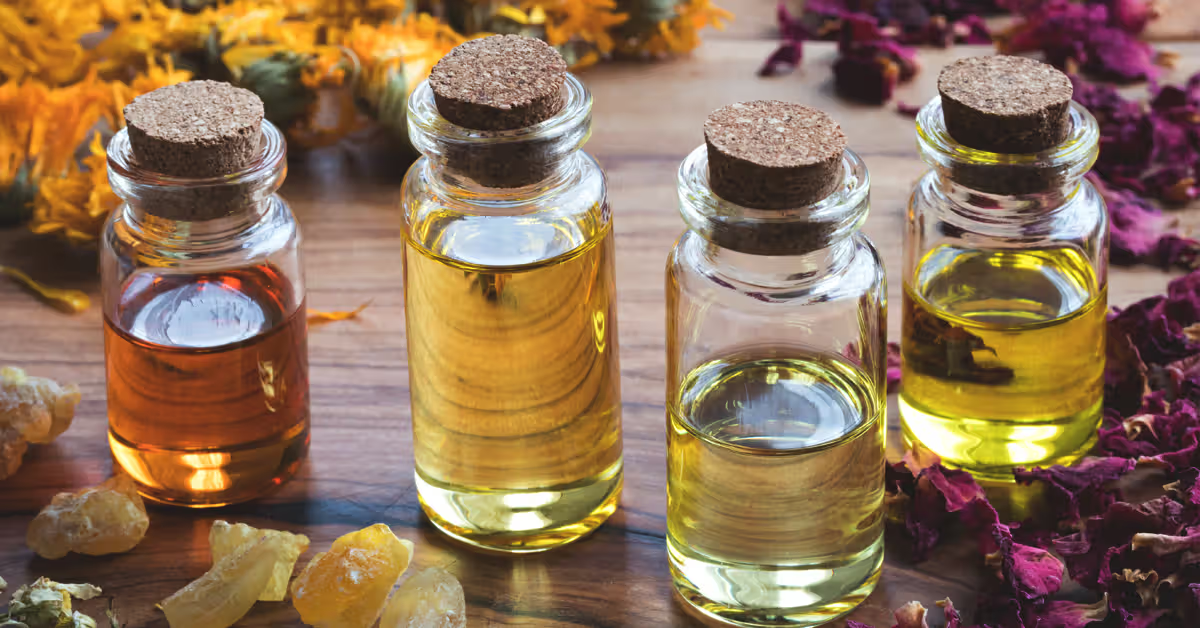
Using both fragrance systems can provide a more complete fragrance experience.
Regular fragrance oil can give clothes a noticeable scent after washing. Encapsulated fragrance may release additional fragrance later when the fabric is handled or worn.
For example, a fresh laundry fragrance may provide the initial scent, while encapsulated fragrance helps maintain a pleasant smell during storage or daily use.
The final result depends on the fragrance materials, the fabric softener formulation and how well the capsules deposit onto the fabric during washing.
How to Choose the Right Amount of Fragrance
The suitable amount of regular fragrance oil and encapsulated fragrance depends on the supplier's recommendations, the concentration of the materials and the desired product performance.
There is no single amount that works for every formulation.
When developing a fabric softener, consider the following:
- Regular fragrance oil: Choose a fragrance suitable for fabric softener and evaluate its scent strength in the finished product.
- Encapsulated fragrance: Follow the supplier's recommended usage instructions for fabric softener applications.
- Softener base: Ensure the selected base can accommodate both fragrance systems.
- Preservative: Select a suitable preservative based on the complete formulation and intended use.
- Water and other ingredients: Adjust the formulation according to the requirements of the selected raw materials.
Start with small laboratory trials and compare the results before moving to larger production batches.
How to Add Encapsulated Fragrance to Fabric Softener
The order of addition and mixing conditions can affect the quality of the finished product.
Step 1: Prepare the fabric softener base
Prepare the main fabric softener system according to the recommended procedure for the selected softening agent. Make sure the base is uniform before adding the fragrance materials.
Step 2: Add the regular fragrance oil
Incorporate the regular fragrance oil according to the formulation procedure. Mix until it is evenly distributed throughout the product.
Step 3: Check the temperature
Before adding encapsulated fragrance, ensure that the mixture is within the suitable temperature range recommended by the supplier.
Avoid unnecessary heating, especially after adding the capsules.
Step 4: Add the encapsulated fragrance
Add the encapsulated fragrance slowly while mixing gently. This helps distribute the capsules throughout the fabric softener without applying unnecessary mechanical force.
Step 5: Continue gentle mixing
Continue mixing only as long as needed to obtain a uniform product. Avoid prolonged, aggressive mixing that may damage the capsules.
Step 6: Check the finished product
Inspect the product for appearance, odour, viscosity, pH, separation and overall stability. Test the finished fabric softener on fabric to evaluate its actual fragrance performance.
Always follow the specific processing instructions supplied for the encapsulated fragrance being used.
Why Is Gentle Mixing Important?
Unlike regular fragrance oil, encapsulated fragrance contains small particles designed to protect the fragrance inside.
Excessive mechanical force may damage the capsules and release their contents prematurely. This can reduce the intended fragrance-release effect.
Formulators should therefore consider:
- Mixing speed and duration
- Processing temperature
- Order of addition
- Mixing equipment
- Product pH
- Compatibility with the softener base and other ingredients
The goal is to achieve even distribution while protecting the capsules.
Can Different Fragrance Scents Be Combined?
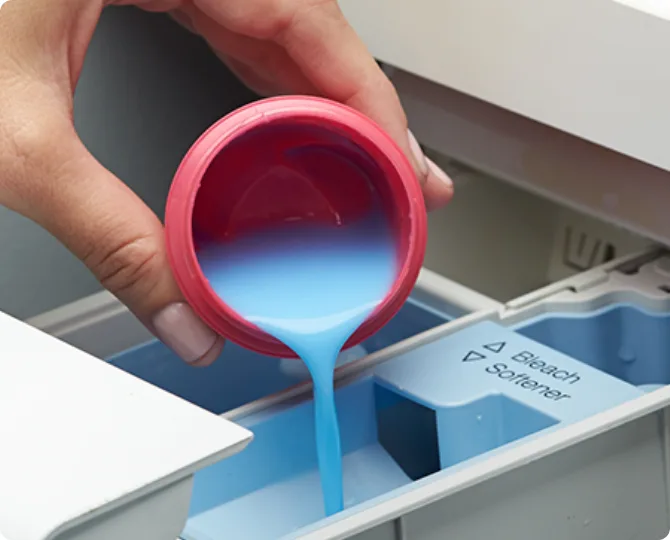
Yes. The regular fragrance and encapsulated fragrance do not necessarily need to have exactly the same scent.
For example, a fresh laundry fragrance could be combined with a clean floral or powdery fragrance to create a more complex scent profile.
However, the fragrances should complement each other. Combining two unrelated or overpowering scents may produce an unbalanced result.
Prepare a small sample and evaluate the final fragrance before production. Remember that a fragrance may smell different in the bottle and on fabric because of the formulation, washing conditions, drying method and fragrance-release behaviour.
What Happens If Too Much Fragrance Is Used?
Adding more fragrance does not always improve product performance.
Excessive regular fragrance oil may affect the stability, appearance or viscosity of the fabric softener. It may also make the finished product smell too strong.
Similarly, adding more encapsulated fragrance does not guarantee a longer-lasting scent. Performance depends on capsule properties, fabric deposition, formulation compatibility and washing conditions.
The best approach is to test different formulation options and select the one that provides the desired fragrance performance without affecting product quality.
Common Problems When Combining Both Fragrances
1. Product separation
Some fragrance materials may not disperse properly in the softener base, leading to separation or an uneven appearance.
2. Unbalanced fragrance
The two fragrance systems may have different scent profiles that do not blend well together.
3. Capsule damage
High-shear mixing or unsuitable processing conditions may damage the capsules and affect fragrance release.
4. Viscosity changes
The addition of fragrance materials may change the thickness or flow of the finished fabric softener.
5. Stability problems
Changes in temperature, pH, or ingredient compatibility may affect the product during storage.
These problems can be reduced through careful material selection, controlled processing, and appropriate product testing.
How to Test the Finished Fabric Softener
Small-scale testing helps determine whether the combination works as intended.
Prepare several samples using different fragrance combinations. Wash similar pieces of fabric under the same conditions and evaluate the fragrance at different stages:
- Immediately after washing
- After drying
- After storage
- After rubbing or handling the fabric
Consider these questions:
- Is the initial fragrance pleasant and noticeable?
- Does the fragrance remain after drying?
- Can fragrance be detected again after rubbing the fabric?
- Does the scent remain pleasant over time?
- Is the fabric softener stable during storage?
- Does the fabric have the expected softness?
Testing the fragrance on fabric is important because the smell of the liquid product alone cannot predict its performance during use.
Practical Tips for Better Results
When developing a fabric softener containing both fragrance systems:
- Select materials suitable for fabric softener applications.
- Follow the supplier's recommended usage and processing instructions.
- Add encapsulated fragrance at the appropriate stage.
- Avoid unnecessary heating and high-shear mixing.
- Test different fragrance combinations on a small scale.
- Check compatibility with the softener base.
- Evaluate fragrance performance on actual fabric.
- Conduct stability testing before production.
- Record the results of each trial for future improvements.
Frequently Asked Questions
Can I use regular perfume and encapsulated fragrance together?
Yes, provided that both materials are suitable for fabric softener and compatible with the complete formulation.
Do both fragrances need to have the same scent?
No. They can have the same, similar or complementary scent profiles. Testing helps ensure that the final fragrance is pleasant and balanced.
Can I add encapsulated fragrance at the beginning of production?
The appropriate addition stage depends on the specific material and manufacturing process. Follow the supplier's instructions and avoid exposing the capsules unnecessarily to heat or high shear.
Does more encapsulated fragrance always mean longer-lasting fragrance?
No. Fragrance longevity also depends on the capsule technology, fabric deposition, washing conditions and compatibility with the formulation.
Conclusion

Encapsulated fragrance and regular fragrance oil can be used together in fabric softener formulations when they are compatible. Regular fragrance provides the initial scent, while encapsulated fragrance can help extend the fragrance experience through more controlled release.
The key is to select suitable materials, use the correct mixing method, and protect the capsules during processing. Small-scale trials, stability checks and fabric testing help determine whether the combination delivers the desired result.
By understanding how both fragrance systems work, formulators can develop fabric softeners with a more balanced and longer-lasting fragrance experience.