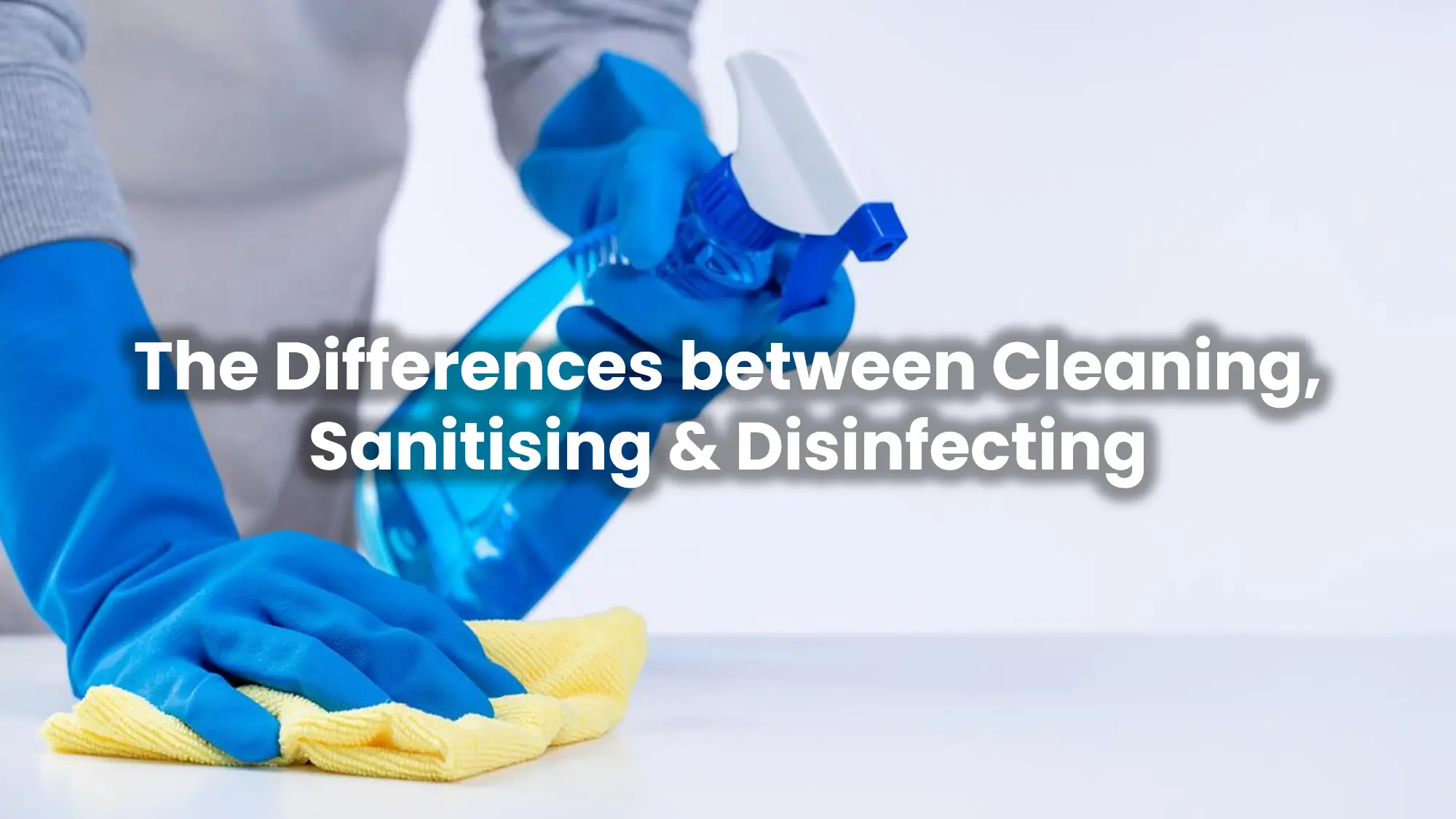
Cleaning, sanitising and disinfecting are common terms used in homes, restaurants, factories, offices and many other industries. Although they are often used interchangeably, they have different purposes.
In simple terms:
- Cleaning removes dirt, grease and other unwanted materials.
- Sanitising reduces microorganisms to a safer or specified level.
- Disinfecting destroys or inactivates many harmful microorganisms.
Understanding these differences is important when selecting cleaning chemicals, developing formulations or setting up hygiene procedures.
What Is Cleaning?
Cleaning is the process of removing dirt, dust, grease, food residue and other contaminants from a surface.
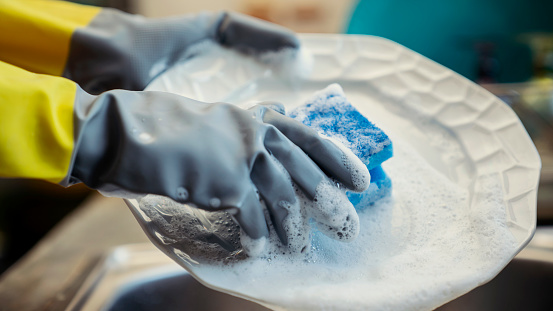
Cleaning normally uses water, mechanical action and cleaning agents such as detergents and surfactants.
For example, when washing a greasy plate with dishwashing liquid, the surfactants help loosen oil and food residue so they can be removed with water.
The main purpose of cleaning is removing contamination, not necessarily killing microorganisms.
A surface can therefore look clean after washing but may still contain microorganisms.
How Does Cleaning Work?
A typical cleaning process involves:
- Wetting the surface.
- Loosening dirt and contaminants.
- Breaking up oils and grease.
- Suspending the dirt in water.
- Removing the contamination through wiping, scrubbing or rinsing.
This is why both the cleaning chemical and mechanical action are important.
What Is Sanitising?
Sanitising is the process of reducing microorganisms on a surface to a specified or acceptable level.
Unlike cleaning, sanitising specifically focuses on microorganisms.
A sanitiser may reduce microorganisms such as bacteria and other target microorganisms, but it does not necessarily eliminate every microorganism on the surface.
For example, in a food preparation area, a surface may first be cleaned to remove food residues. A suitable sanitising treatment can then be used to reduce microorganisms that remain on the surface.
Therefore:
Cleaning = Remove contamination
Sanitising = Reduce microorganisms
What Is Disinfecting?
Disinfecting is the process of using a chemical or physical method to destroy or inactivate many specified harmful microorganisms on a surface.
Depending on the disinfectant, target microorganisms may include certain:
- Bacteria
- Viruses
- Fungi
However, not every disinfectant is effective against every type of microorganism. Effectiveness depends on factors such as the active ingredient, concentration, contact time and target microorganism.
Disinfection is also different from sterilisation.
Disinfection aims to destroy or inactivate many specified microorganisms.
Sterilisation is a much higher level of microbial control and is designed to eliminate all viable microorganisms when a validated sterilisation process is used.
Cleaning vs Sanitising vs Disinfecting
Process | Main Purpose | Main Target |
Cleaning | Remove dirt and contamination | Dirt, grease, food residue and other soils |
Sanitising | Reduce microorganisms to a specified level | Microorganisms |
Disinfecting | Destroy or inactivate many specified microorganisms | Bacteria, viruses, fungi and others |
These processes are not necessarily alternatives. In many applications, they are used together.
Why Should You Clean Before Disinfecting?
One important principle in surface hygiene is:
Clean first, then disinfect when disinfection is required.
Dirt, grease and organic matter can interfere with the performance of some disinfectants.
For example, imagine a surface covered with food residue and grease. If disinfectant is applied directly, part of the chemical may interact with the contamination instead of making good contact with the microorganisms.
Cleaning first removes much of the physical contamination and allows the disinfectant to make better contact with the surface.
A typical process may therefore be:
Dirty surface → Cleaning → Removal/rinsing → Disinfection → Required contact time
The exact procedure depends on the chemical and application.
What Is Contact Time?
Contact time is the period that a sanitiser or disinfectant needs to remain in contact with the surface to achieve its intended effect.
This is an important part of disinfection.
For example, if a disinfectant requires a certain contact time but is sprayed and immediately wiped away, it may not achieve the expected microbial reduction.
The required contact time varies according to the product, concentration, microorganism and application.
Always follow the recommended contact time for the specific product.
What Factors Affect Disinfection?
Several factors can affect antimicrobial performance.
1. Surface Cleanliness
Heavy dirt and organic matter can interfere with some disinfectants.
2. Concentration
The active ingredient must be used at an appropriate concentration for the intended application.
3. Contact Time
The chemical needs sufficient time to work.
4. pH
Some antimicrobial chemicals perform better within a particular pH range. Changing the formulation pH can therefore affect performance and stability.
5. Temperature
Temperature can affect chemical reactions and microbial activity, although the effect depends on the specific chemical.
6. Water Quality
Hard water and dissolved minerals can affect certain cleaning and antimicrobial formulations.
7. Type of Microorganism
Different microorganisms have different levels of resistance. A product effective against one microorganism may not have the same effectiveness against another.
8. Surface Material
Glass, plastic, metal, rubber and painted surfaces may have different chemical compatibility requirements.
Can a Product Clean and Disinfect at the Same Time?
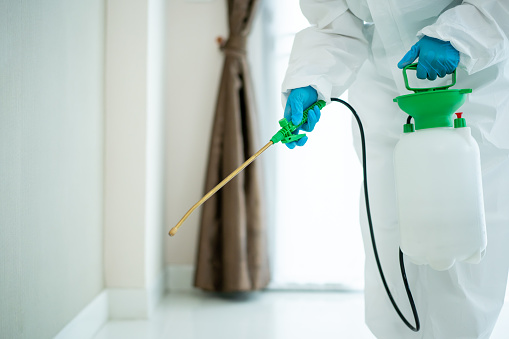
Yes. Some products are formulated as cleaner-disinfectants, combining cleaning and antimicrobial functions.
However, not every cleaning product is a disinfectant.
A product should only be treated as a disinfectant when it is specifically formulated, tested and labelled for that purpose according to the relevant requirements.
This is especially important for commercial and industrial applications.
Examples in Different Industries
Food and Beverage
A food preparation surface may go through:
Remove food residue → Clean → Rinse → Sanitise
The exact procedure depends on the facility's hygiene requirements.
Healthcare
Healthcare facilities may require more controlled cleaning and disinfection procedures. Frequently touched surfaces such as door handles, bed rails and equipment surfaces may require regular disinfection.
Hospitality
Hotels and other hospitality businesses commonly clean surfaces to remove dirt and residues. Frequently touched areas may then receive suitable sanitising or disinfecting treatment.
Manufacturing
Factories may use cleaning chemicals to remove oils, grease, dust and production residues. Certain manufacturing environments may also require sanitising or disinfection as part of their hygiene programme.
Common Mistakes
Using Disinfectant on a Dirty Surface
Disinfectant is not always a replacement for cleaning. Heavy contamination should generally be removed first.
Removing Disinfectant Too Quickly
If a product requires a specific contact time, wiping it away immediately may reduce its effectiveness.
Assuming All Disinfectants Kill Everything
Different products have different antimicrobial activity. Always consider the target microorganism and product specifications.
Using More Chemical Than Necessary
A higher concentration does not automatically mean better performance. The correct concentration should be based on the intended application.
Ignoring Surface Compatibility
A chemical may be effective against microorganisms but unsuitable for certain materials.
Mixing Cleaning Chemicals
Different chemicals can react with each other and may reduce performance or create unwanted products. Chemicals should not be mixed unless the formulation has been specifically designed and tested for the combination.
How Do You Choose Between Cleaning, Sanitising and Disinfecting?
Start by asking, what problem are you trying to solve?
If the main problem is dirt, grease or residue, cleaning is the primary requirement.
If the objective is to reduce microorganisms to a specified level, sanitising may be suitable.
If the objective is to destroy or inactivate specified harmful microorganisms, disinfection may be required.
In many situations, more than one process is used.
For example:
Cleaning → Sanitising
or
Cleaning → Disinfecting
The correct approach depends on the surface, contamination, required hygiene level, chemical used and application requirements.
Conclusion
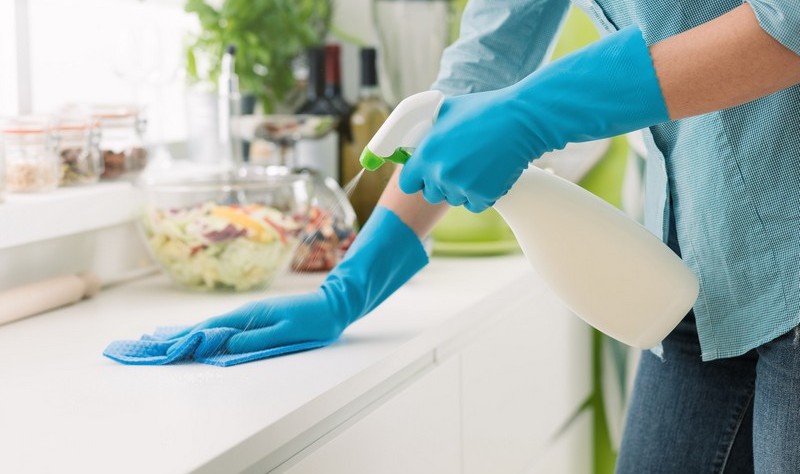
Cleaning, sanitising and disinfecting are different processes, but they often work together as part of a complete hygiene system.
Cleaning removes dirt, grease and other physical contamination.
Sanitising reduces microorganisms to a specified or acceptable level.
Disinfecting destroys or inactivates many specified harmful microorganisms.
One simple way to remember the difference is:
Cleaning = Remove
Sanitising = Reduce
Disinfecting = Destroy or Inactivate
An effective hygiene process is not simply about using the strongest chemical. The right chemical, concentration, contact time and application method should be selected according to the specific surface and hygiene requirement.
Understanding these differences helps manufacturers, formulators and end users select suitable cleaning and antimicrobial products for their intended applications.