
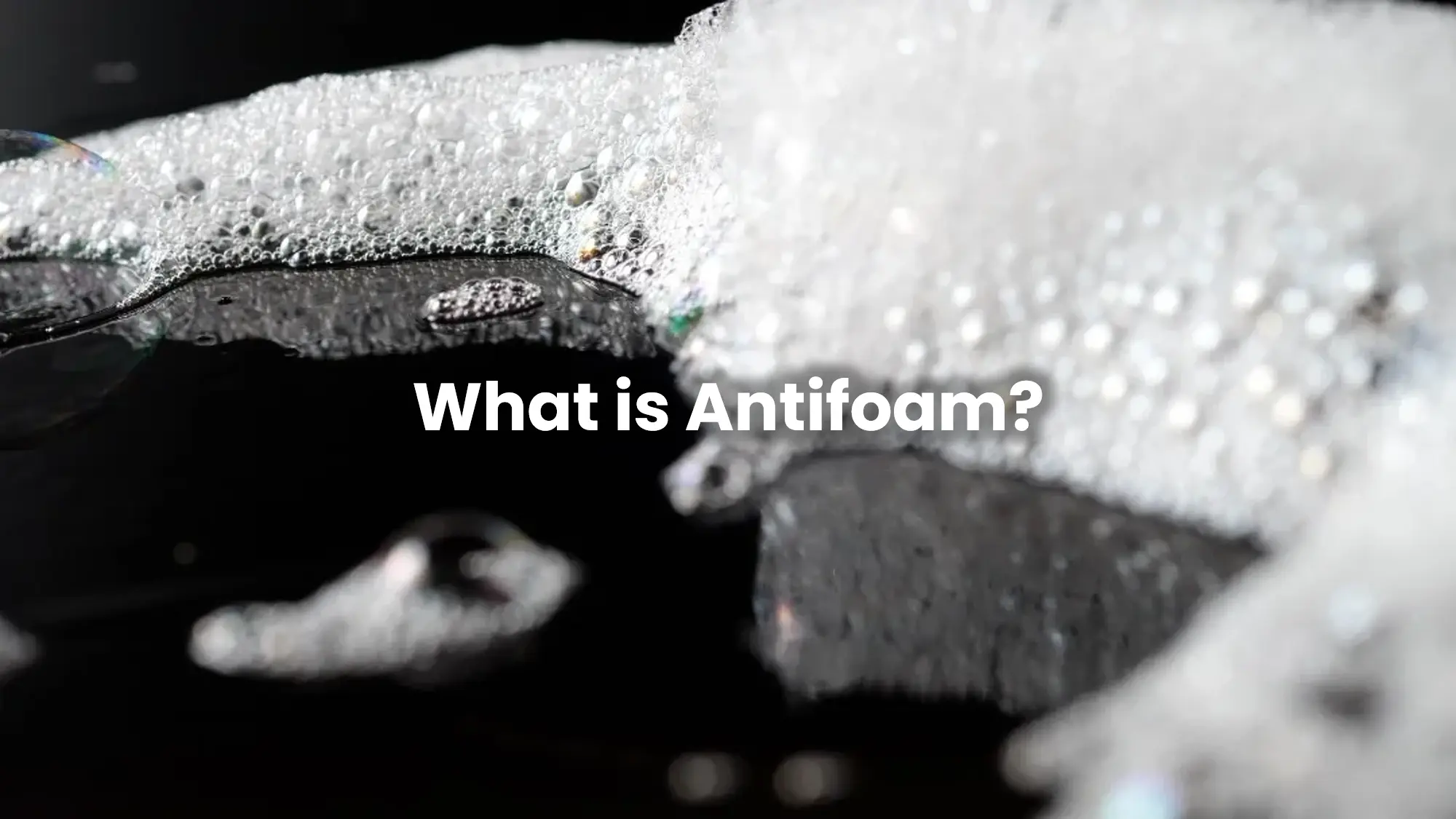
Foam is a common issue in many chemical and industrial processes. It can form when a liquid is mixed, stirred, pumped, sprayed, aerated or heated. Surfactants and other surface-active ingredients can make the foam more stable and difficult to remove.
Excessive foam may look like a simple appearance problem, but it can affect production in several ways. It may cause tank overflow, make liquid-level measurement difficult, slow down filling, interfere with pumps and equipment and increase processing time.
Antifoam is a chemical additive used to reduce, control or eliminate unwanted foam in liquid systems. It is widely used in industries such as detergent manufacturing, industrial cleaning, wastewater treatment, paints and coatings, textile processing, pulp and paper and chemical manufacturing.
Understanding how antifoam works and how it should be selected can help manufacturers control foam without negatively affecting the final product.
What Is Antifoam?
Antifoam is a foam-control additive that helps prevent excessive foam formation or break foam that has already formed.
Foam consists of many gas bubbles surrounded by thin liquid films. When substances such as surfactants are present, they can help stabilise these bubbles and make the foam last longer.
Antifoam works by interfering with the stability of these foam films. Once the film becomes unstable, the bubbles break and the amount of foam decreases.
In simple terms:
Foam forms → Antifoam interferes with the foam structure → Bubbles become unstable → Foam decreases
The effectiveness of an antifoam depends on its chemical composition and the formulation in which it is used. An antifoam that performs well in one product may not give the same result in another.
Why Does Foam Form?
Foam normally forms when air becomes trapped in a liquid.
This can happen during:
- High-speed mixing
- Pumping
- Spraying
- Aeration
- Agitation
- Heating
- Circulation
The presence of surfactants can make the foam much more stable.
For example, detergents and cleaning products commonly contain surfactants such as SLES, SLS, LABSA-based surfactants and betaines. These ingredients can produce foam when the product is mixed or used.
Foam is not always a problem. Some products are designed to produce foam because the user expects it during application. Other products, especially those used in machines, may require low foam.
This raises an important formulation question:
Is the foam actually unwanted or is a certain amount of foam part of the product's intended performance?
The answer determines whether an antifoam is needed and how much should be used.
How Does Antifoam Work?
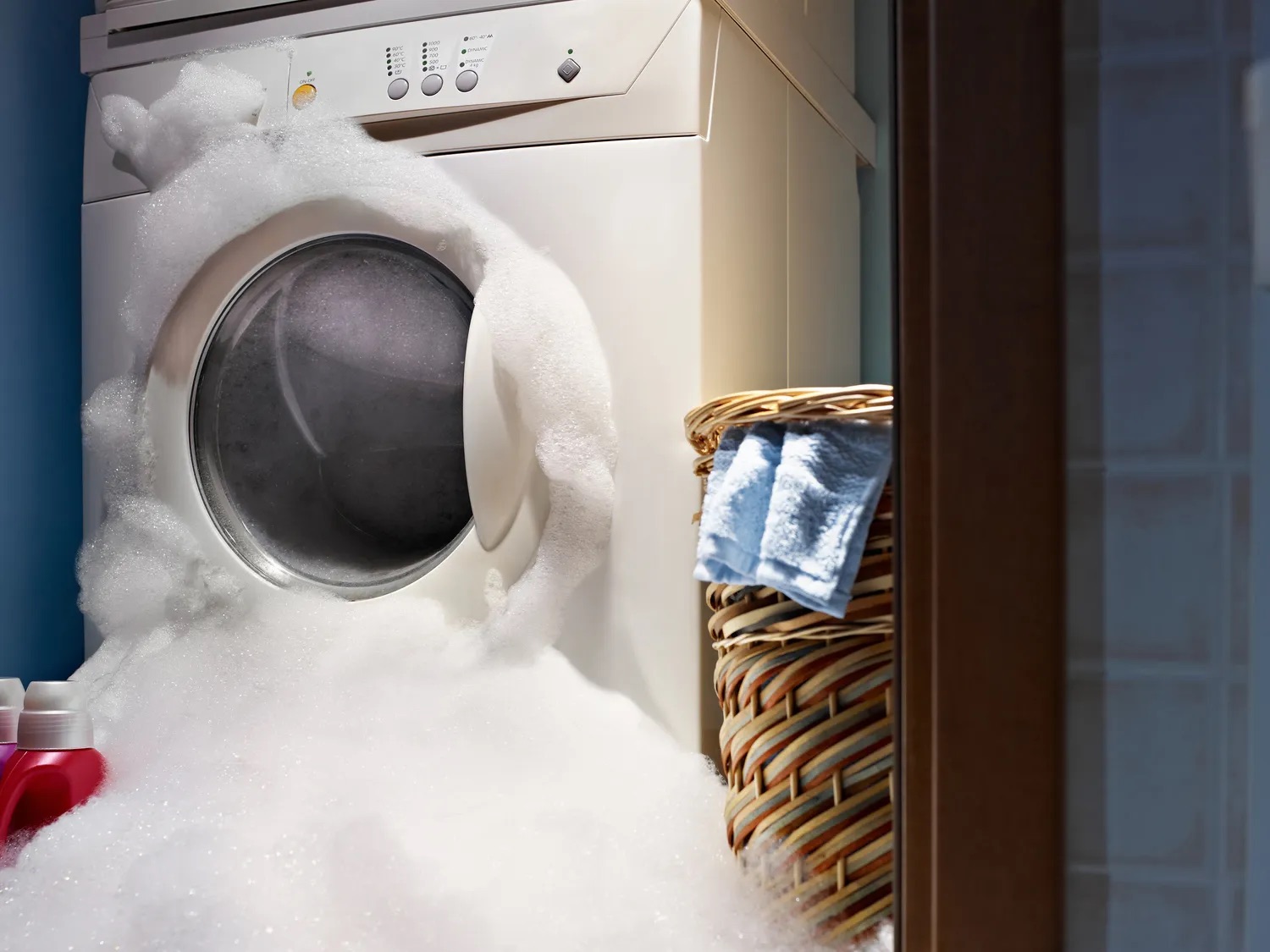
Antifoam works mainly by disturbing the liquid film surrounding foam bubbles.
A stable foam bubble has a thin liquid layer that prevents the bubble from breaking easily. Antifoam enters this foam structure and interferes with the film, causing it to become less stable.
Different antifoam chemistries can work in slightly different ways, but the general purpose is the same: reduce foam stability and help bubbles collapse.
Antifoam can be used in two ways:
Preventive foam control – added during formulation or processing to reduce the formation of excessive foam.
Foam breaking – added when foam has already formed to help reduce the existing foam.
The best approach depends on the manufacturing process and the type of foam being produced.
What Are the Main Functions of Antifoam?
The main purpose of antifoam is foam control, but this can provide several practical benefits during production.
Reduce Existing Foam
Antifoam can help collapse foam that has already formed.
Prevent Excessive Foam
Some antifoams can reduce the formation of new foam during continuous mixing or processing.
Improve Production Efficiency
Excessive foam can slow down mixing, pumping, filling and other production operations.
Reduce Overflow
Foam can occupy a large amount of space in a mixing tank. Controlling it can reduce the risk of foam reaching the top of the vessel.
Improve Filling
Foamy products can be difficult to fill accurately because air bubbles increase the apparent volume. Better foam control can improve filling consistency.
Protect Process Operations
Foam may interfere with pumps, sensors, filters, liquid-level measurement and other equipment. Foam control can help maintain more stable operation.
Industrial Applications of Antifoam
Antifoams are used in many industries. The required product and dosage can vary significantly depending on the application.
Detergent and Cleaning Products
Detergents contain surfactants that can generate considerable foam during mixing and production.
Antifoam can help control unwanted foam during manufacturing, especially when high-speed mixing is used.
However, the required foam level depends on the final product. A hand dishwashing product may require noticeable foam during use, while a machine cleaning product may require much lower foam.
Therefore, the antifoam should be selected based on the intended use of the cleaning product, not simply the amount of foam observed during production.
Industrial Degreasers
Industrial degreasers may contain surfactants, alkaline materials, solvents and other ingredients that can generate foam.
Low-foam performance can be particularly important for machine-assisted cleaning, circulation cleaning, pressure washing, and parts washing.
Excessive foam in these systems may interfere with pumps and reduce cleaning efficiency.
Antifoam can therefore help maintain a more controlled foam level while allowing the degreaser to perform its main cleaning function.
Wastewater Treatment
Foam can develop in wastewater treatment systems due to surfactants, organic materials, biological activity and aeration.
Excessive foam can interfere with plant operation and create handling problems.
Antifoams may be used to control this foam, but compatibility with the overall treatment process should be considered.
Paints and Coatings
Foam can become trapped during high-speed mixing of paints and coatings.
If the air remains in the finished product, it may contribute to surface defects, pinholes or uneven appearance.
A suitable antifoam can help reduce foam and improve processing.
However, compatibility is particularly important because an unsuitable antifoam may itself create surface defects.
Textile Processing
Foam can occur during textile washing, dyeing, finishing and other wet-processing operations.
Antifoam can help control excessive foam and improve process stability.
The selected product should not negatively affect the appearance or performance of the finished textile.
Pulp and Paper Processing
Pulp and paper production involves large amounts of water, mechanical movement and air incorporation.
Foam can interfere with processing and equipment operation.
Antifoam can be used at suitable stages to maintain better process control.
Fermentation and Other Chemical Processes
Fermentation can generate significant foam due to biological activity, proteins, aeration and agitation.
Chemical manufacturing processes can also produce foam when liquids are mixed or processed at high speed.
In these applications, antifoam can help prevent foam from interfering with tanks, filters, exhaust systems and other equipment.
How Much Antifoam Should Be Used?
There is no universal dosage for antifoam.
The correct dosage depends on:
- Type of antifoam
- Type of formulation
- Surfactant concentration
- Mixing speed
- Temperature
- pH
- Foam severity
- Desired foam level
- Application method
For many industrial formulations, a useful laboratory starting range may be around 0.05%–0.5%.
For a 100 kg batch:
Dosage | Amount for 100 kg |
0.05% | 50 g |
0.10% | 100 g |
0.20% | 200 g |
0.50% | 500 g |
This should be treated as a starting range for testing, not a fixed recommendation for every product.
A better formulation approach is to begin with a low dosage and gradually increase it until the required foam control is achieved.
Why Not Simply Use More Antifoam?
Higher dosage does not automatically mean better performance.
Too much antifoam may cause:
- Cloudiness
- Separation
- Surface defects
- Residue
- Compatibility problems
- Changes in viscosity
- Reduced product performance
The objective should therefore be to find the lowest effective dosage that controls the foam without creating other problems.
How to Add Antifoam to a Formulation
The addition method depends on the formulation and antifoam type.
A general approach is:
1. Prepare the main formulation
Mix the main ingredients according to the formulation procedure.
2. Observe the foam
Identify when the foam is generated. It may occur after adding surfactants, during high-speed mixing or during pumping.
3. Add a small amount of antifoam
Start with a low concentration suitable for laboratory testing.
4. Mix properly
Allow sufficient mixing time so the antifoam can disperse through the formulation.
5. Evaluate the foam
Check whether the foam collapses and whether new foam continues to form.
6. Increase gradually if necessary
If the foam remains excessive, increase the dosage in small steps rather than adding a large amount at once.
7. Check the final product
After achieving the desired foam level, check appearance, stability, viscosity and other important product properties.
Factors That Affect Antifoam Performance
An antifoam's performance can change depending on the formulation and manufacturing process.
Surfactant Type and Concentration
Different surfactants produce different types of foam. A high surfactant concentration may also require stronger foam control.
Mixing Speed
Higher mixing speed can introduce more air and produce more foam.
Temperature
Temperature can affect viscosity, surface tension and the behaviour of the antifoam.
pH
Very acidic or alkaline formulations may affect the performance or stability of certain antifoam systems.
Viscosity
Thicker liquids may hold air for longer, making foam more difficult to remove.
Addition Point
Adding antifoam during formulation may help prevent excessive foam, while adding it later may be useful when breaking existing foam.
The best addition point should be determined through testing.
Common Problems When Using Antifoam
Foam Is Still Too High
Possible causes include insufficient dosage, poor compatibility, excessive agitation or an unsuitable antifoam type.
The Product Becomes Cloudy
This may indicate that the antifoam is not well dispersed or is incompatible with the formulation.
The Product Separates
Some antifoams can affect formulation stability when used at an unsuitable concentration.
Foam Is Reduced Too Much
Not every product should be completely foam-free. If foam is part of the expected product experience, excessive antifoam can negatively affect the final product.
Antifoam Works in the Laboratory but Not in Production
Laboratory and production equipment can have very different mixing speeds, tank shapes, temperatures and air incorporation.
A product that works in a small laboratory batch should therefore be tested again during scale-up.
How to Select the Right Antifoam
The best antifoam is not necessarily the one that removes foam the fastest. It should provide the required foam control while remaining compatible with the complete formulation.
Before selecting an antifoam, consider:
What product is being manufactured?
A detergent, degreaser, coating, textile chemical and wastewater treatment product may require different antifoam technologies.
When does the foam occur?
Foam during manufacturing may require a different approach from foam during final product use.
Is the system water-based or oil-based?
Compatibility with the main liquid system is important.
What is the pH and temperature?
These conditions can affect antifoam performance.
How much foam is acceptable?
The target should be controlled foam, not necessarily zero foam.
Will the product undergo further processing?
Surface-sensitive applications such as coatings, printing and bonding may require special consideration.
Frequently Asked Questions
What is antifoam used for?
Antifoam is used to reduce or control unwanted foam in liquid systems during manufacturing or product use.
Can antifoam be used in detergent?
Yes. Antifoam can be used in detergent formulations when excessive foam needs to be controlled. The required dosage depends on the formulation and whether foam is wanted during product use.
Can antifoam be used in industrial degreaser?
Yes. It is particularly useful when the degreaser is used in machines, spray systems, circulation systems or other applications where excessive foam can interfere with operation.
What is a normal antifoam dosage?
A starting range of approximately 0.05%–0.5% may be evaluated for many industrial formulations. The actual dosage should be determined through application testing.
Can too much antifoam be harmful to a formulation?
Yes. Excessive antifoam may affect appearance, stability, surface properties or other product characteristics.
Does antifoam remove all foam?
Not necessarily. The objective is usually to reduce foam to an acceptable level. Some products intentionally require foam during use.
Can one antifoam be used for every application?
No. Antifoam performance depends on the chemical formulation and processing conditions. Selection should be based on compatibility and actual application requirements.
Conclusion
Antifoam is an important chemical additive used to control unwanted foam in many industrial processes. Foam can be generated by surfactants, agitation, pumping, aeration and other processing conditions.
Antifoam is commonly used in detergents, industrial degreasers, wastewater treatment, paints and coatings, textile processing, pulp and paper, fermentation and chemical manufacturing.
The correct dosage is one of the most important factors in formulation. A starting range such as 0.05%–0.5% can be evaluated for many industrial applications, followed by gradual adjustment based on actual foam performance.
Most importantly, antifoam selection should not focus only on how quickly it breaks foam. The antifoam should also be compatible with the formulation and should not negatively affect product stability, appearance, performance or downstream processing.
When the right antifoam is combined with suitable formulation and process control, excessive foam can be managed more effectively while maintaining the quality and performance of the final product.