

Corrosion is a common concern when using acid to clean metal surfaces. Acid cleaning is widely used to remove rust, scale, mineral deposits, oxides and other unwanted materials from metal components and equipment.
However, acid does not always react only with the unwanted deposits. Once the deposits are removed, the exposed metal surface can also be attacked by the acid. If this reaction is too strong, it may result in unnecessary metal loss or surface damage.
This is where a corrosion inhibitor can be useful.
A corrosion inhibitor for acid cleaning is a chemical additive designed to help reduce the attack of acid on the metal surface during the cleaning process. It helps the acid carry out its cleaning function while reducing unnecessary corrosion of the underlying metal.
One important point should be made clear: a corrosion inhibitor is not a rust remover. Its purpose is to help protect the metal during acid cleaning, not to remove existing rust by itself.
A simple way to understand its role is:
Acid → Cleans and removes unwanted deposits
Corrosion inhibitor → Helps protect the metal surface
Understanding this difference is important when selecting chemicals for an acid-cleaning formulation.
What Is a Corrosion Inhibitor?
A corrosion inhibitor is a chemical substance that helps reduce the rate at which a metal is attacked by a corrosive environment.
For acid cleaning, the corrosive environment is the acidic solution used to clean the metal.
When metal comes into contact with acid, the acid can react with the metal surface. The strength of this reaction depends on factors such as the type of acid, acid concentration, metal type, temperature and contact time.
A suitable corrosion inhibitor interacts with the metal surface and helps reduce this unwanted attack.
The objective is not necessarily to stop the acid from working. Instead, the inhibitor helps achieve a better balance between:
Effective cleaning + Reduced metal attack
This makes corrosion inhibitors useful when an acidic cleaning solution needs to be strong enough to remove deposits but also needs to minimise unnecessary damage to the underlying metal.
Why Is Corrosion Inhibitor Used in Acid Cleaning?
The main reason is simple: acid can attack both unwanted deposits and the metal itself.
Consider a steel component covered with rust.
At the beginning of the cleaning process, the acid comes into contact with the rust and helps dissolve or remove it. As the rust layer becomes thinner, more of the underlying steel becomes exposed.
If the acid continues to react strongly with the exposed steel, unnecessary metal attack can occur.
A corrosion inhibitor helps reduce this unwanted reaction.
Therefore, the purpose of an acid-cleaning corrosion inhibitor is to help protect the metal while the acid is carrying out the cleaning process.
This can be particularly important when:
- The acid is relatively aggressive
- The cleaning time is extended
- The cleaning temperature is elevated
- The metal component is valuable or sensitive to surface damage
- The surface must maintain a certain condition after cleaning
The inhibitor is therefore part of the overall cleaning system rather than a replacement for the acid.
How Does a Corrosion Inhibitor Work?

The exact mechanism depends on the type of inhibitor, acid and metal involved.
Many acid corrosion inhibitors work by interacting with the metal surface and forming a protective layer. This layer reduces direct interaction between the metal and the acidic solution.
A simple way to visualise the difference is:
Without inhibitor:
Acid → Direct contact with metal → Greater metal attack
With inhibitor:
Acid → Protective inhibitor layer → Reduced metal attack
The protective layer may be very thin and may not be visible to the eye. Its purpose is to reduce the rate at which the acid attacks the underlying metal.
The level of protection is influenced by the inhibitor concentration and the operating conditions. An inhibitor that works well under one set of conditions may not provide the same performance if the acid concentration, temperature, metal or cleaning time is changed.
What Happens When Acid Attacks the Metal?
Acid cleaning can be effective because acids react with unwanted materials on the metal surface. However, under certain conditions, the same acid can also attack the underlying metal.
The level of metal attack depends on several factors.
Acid Type
Different acids have different effects on different metals. An inhibitor suitable for one acid system may not provide the same protection in another.
Acid Concentration
A higher acid concentration can create a more aggressive cleaning environment. The required inhibitor level may therefore depend on the acid concentration.
Temperature
Higher temperatures can increase the speed of chemical reactions. While this may improve cleaning efficiency, it can also increase metal attack.
Contact Time
The longer the metal remains in contact with the acid, the longer it is exposed to the corrosive environment.
Metal Type
Carbon steel, cast iron, stainless steel, aluminium, copper and other metals can respond differently to acid.
Surface Condition
A heavily rusted surface and a clean metal surface do not behave in the same way. Once the rust or scale has been removed, the underlying metal becomes more exposed to the acid.
These factors should be considered together when developing an acid-cleaning formulation.
Applications of Corrosion Inhibitor in Acid Cleaning
Acid-cleaning corrosion inhibitors can be useful in many situations where acidic solutions are used to clean metal.
Metal Parts Cleaning
Metal components may develop rust, scale or oxide deposits during use or storage. Acid cleaning can help remove these materials, while a corrosion inhibitor helps reduce unnecessary attack on the metal.
Industrial Equipment
Tanks, machinery and other industrial equipment may accumulate mineral deposits or corrosion products over time.
An acid-cleaning solution can help remove these deposits, while the inhibitor provides additional protection for the metal surface during treatment.
Pipes and Tanks
Pipes and tanks may develop scale or mineral deposits internally.
Acid cleaning can help dissolve these deposits. The addition of a suitable corrosion inhibitor can help reduce excessive attack on the metal during the cleaning process.
Heat Exchangers
Scale and mineral deposits can reduce heat transfer efficiency.
Acid cleaning may be used to remove these deposits, with an appropriate inhibitor helping to reduce unwanted metal attack during treatment.
Automotive and Machinery Components
Some metal components may require acid treatment during maintenance or restoration to remove rust and inorganic deposits.
An appropriate inhibitor can help minimise unnecessary acid attack during the cleaning process.
How to Use Corrosion Inhibitor in an Acid-Cleaning Formulation
The exact formulation depends on the acid, metal and cleaning requirements. However, the general approach is relatively straightforward.
1. Identify the Metal
First, determine the metal that will come into contact with the acid.
For example, carbon steel and aluminium can behave very differently in an acidic environment.
2. Identify the Acid and Its Concentration
Determine the type and concentration of acid required for the cleaning process.
The corrosion inhibitor should be compatible with the selected acid system.
3. Determine the Cleaning Conditions
Consider:
- Cleaning temperature
- Contact time
- Immersion or circulation method
- Level of contamination
- Required cleaning strength
These conditions affect both cleaning performance and corrosion.
4. Add the Corrosion Inhibitor at the Recommended Dosage
Use the recommended dosage range for the specific inhibitor and application.
Avoid assuming that a single dosage will work for every acid concentration, metal or cleaning condition.
5. Mix Thoroughly
The inhibitor should be properly distributed throughout the cleaning solution to provide consistent protection.
6. Test Before Full-Scale Application
Where practical, test the formulation on a small metal sample first.
Check both:
Cleaning performance and Condition of the metal surface
The aim is to achieve the required cleaning result while minimising unnecessary metal attack.
What Happens After the Rust or Scale Has Been Removed?
This stage is often overlooked.
At the beginning of acid cleaning, the acid may mainly come into contact with rust, scale or other deposits.
As these deposits are removed, more clean metal becomes exposed.
If the cleaning process continues for longer than necessary, the acid may continue attacking the newly exposed metal.
This is why cleaning time is important.
Once the required cleaning result has been achieved, the acid treatment should be stopped according to the established cleaning procedure. The metal can then be rinsed and further treated as required.
A corrosion inhibitor helps reduce metal attack during the acid exposure, but it does not mean the metal can be exposed to acid indefinitely.
Common Mistakes When Using Acid-Cleaning Corrosion Inhibitors
Using the Inhibitor as a Rust Remover
A corrosion inhibitor is not designed to remove rust. Its role is to help protect the metal during acid cleaning.
Using the Same Dosage for Every Application
The required dosage can vary depending on acid concentration, metal type, temperature and contact time.
Ignoring the Metal Type
An inhibitor suitable for one metal may not provide the same performance on another.
Using Acid for Too Long
Longer cleaning time is not always better. Once the required deposits have been removed, continued acid exposure can increase metal attack.
Ignoring Temperature
Higher temperatures can affect both cleaning speed and corrosion rate.
Skipping Small-Scale Testing
Testing the formulation on a representative metal sample can help identify potential problems before full-scale use.
How Can Corrosion Inhibitor Performance Be Tested?
A simple comparison can help evaluate whether an inhibitor is providing useful protection.
For example, two similar metal samples can be exposed under the same conditions:
Sample A: Acid only
Sample B: Acid + Corrosion Inhibitor
After the same exposure period, the samples can be compared.
Look for differences in:
- Surface appearance
- Discolouration
- Surface roughness
- Etching
- Metal loss
- Overall surface condition
The cleaning performance should also be checked. An inhibitor should provide protection without preventing the acid from achieving the required cleaning result.
For more demanding applications, laboratory corrosion testing can provide more detailed performance information.
Benefits of Using a Corrosion Inhibitor During Acid Cleaning
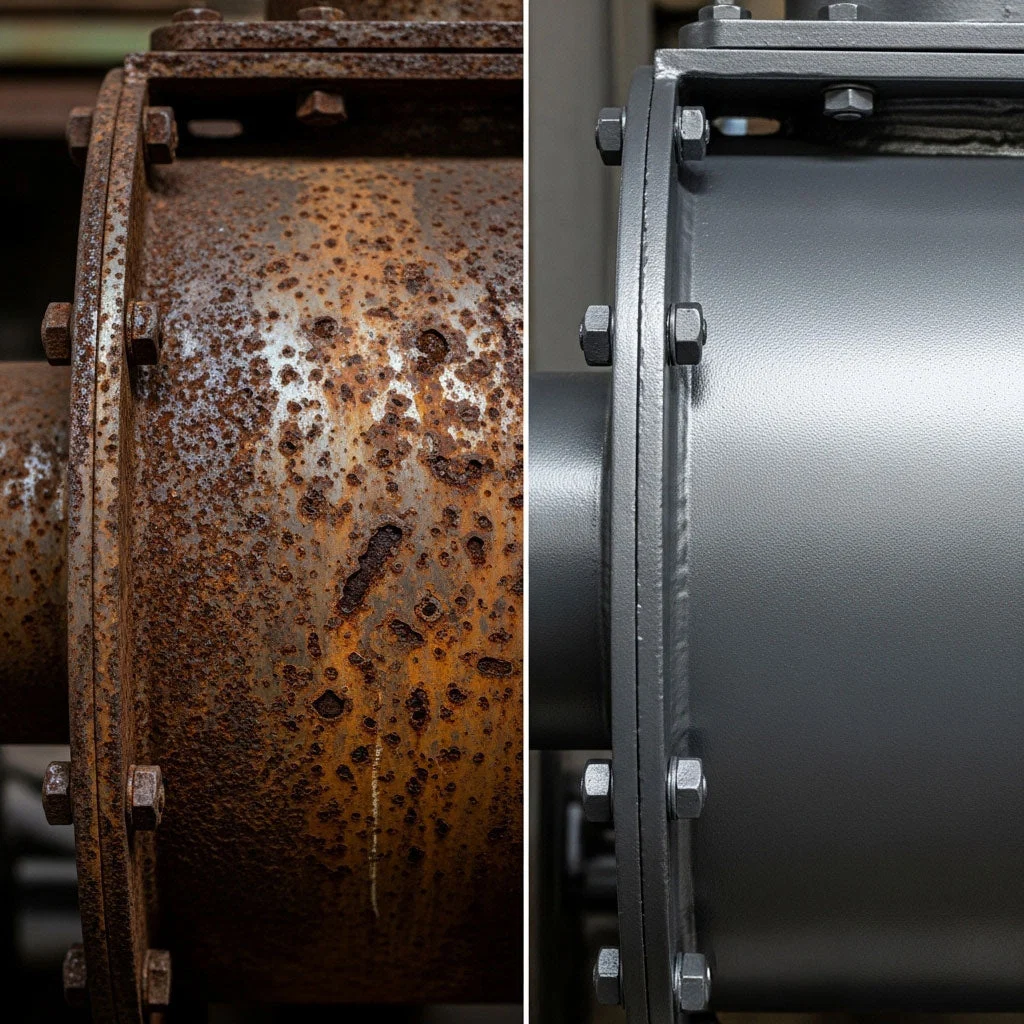
When properly selected and used, an acid-cleaning corrosion inhibitor can provide several benefits.
Helps Reduce Metal Attack
The main purpose is to reduce unwanted corrosion of the underlying metal during acid exposure.
Supports Controlled Cleaning
The acid can continue performing its intended cleaning function while the inhibitor helps control excessive metal attack.
Helps Maintain Surface Condition
Reducing unnecessary acid attack can help minimise deterioration of the metal surface.
Useful for Industrial Cleaning
It can be incorporated into suitable acid-cleaning systems used for metal components, equipment, pipes, tanks and other applications.
Helps Balance Cleaning and Protection
The overall goal is to remove unwanted deposits effectively while reducing unnecessary damage to the metal underneath.
Frequently Asked Questions
Is corrosion inhibitor a rust remover?
No. A corrosion inhibitor is not intended for rust removal. The acid or cleaning chemistry performs the rust-removal function, while the inhibitor helps protect the metal surface.
Can corrosion inhibitor be used with acid?
Yes. Certain corrosion inhibitors are specifically designed for use in acid-cleaning systems. However, compatibility with the specific acid, metal and operating conditions should be considered.
Can one inhibitor be used with every type of acid?
No. Different inhibitors have different performance and compatibility characteristics. The inhibitor should be selected according to the acid system.
Can one corrosion inhibitor protect every type of metal?
Not necessarily. Different metals can respond differently to acidic environments, so metal compatibility should be considered.
Does more corrosion inhibitor always provide better protection?
No. There is normally a suitable dosage range. Excessive use does not necessarily result in proportionally better protection.
Does corrosion inhibitor completely stop corrosion?
Its purpose is to reduce corrosion or metal attack. It should not be understood as a guarantee that corrosion will be completely eliminated under every condition.
Conclusion
A corrosion inhibitor for acid cleaning is a chemical additive designed to help reduce excessive acid attack on metal surfaces during the cleaning process.
Its function is different from a rust remover. The acid or cleaning chemistry helps remove rust, scale, oxides and other unwanted deposits, while the corrosion inhibitor helps protect the underlying metal from unnecessary attack.
This becomes especially important as the cleaning process progresses. Once rust or scale has been removed, more of the clean metal surface becomes exposed to the acid. A suitable inhibitor can help reduce the rate of attack on this exposed surface.
The performance of an acid-cleaning corrosion inhibitor depends on factors such as acid type, acid concentration, metal type, temperature and contact time. Correct dosage and practical testing are therefore important when developing or using an acid-cleaning formulation.
The basic principle is simple:
Acid cleans. Corrosion inhibitor helps protect.
When the two are properly balanced, acid cleaning can remove unwanted deposits while helping to minimise unnecessary attack on the metal surface.