
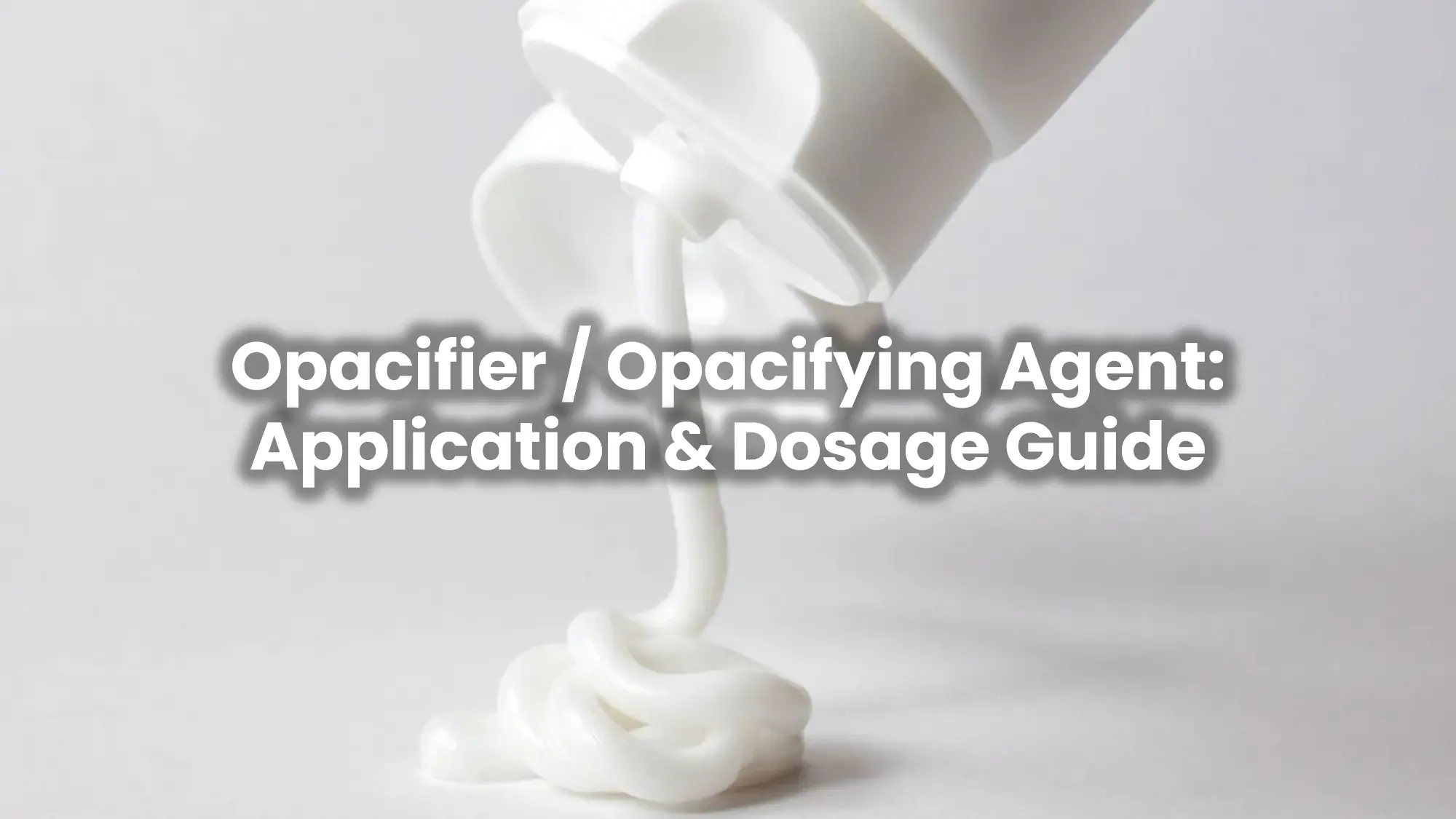
An opacifier, also known as an opacifying agent, is a functional ingredient used to reduce the transparency of a liquid formulation and give it a white, milky, cloudy or opaque appearance.
Opacifiers are commonly used in personal care, home care, detergent and cleaning products. They are especially useful when a formulator wants to change a clear or translucent product into a more creamy-looking formulation.
The correct dosage and addition method are important. Using too little may not provide enough opacity, while using too much can affect the appearance, cost, viscosity or stability of the finished product.
This guide explains what an opacifier does, its common applications, recommended dosage, calculation method, addition procedure and important formulation considerations.
What Is an Opacifier?
An opacifier is an ingredient that makes a transparent or translucent liquid appear less transparent or completely opaque.
In a clear liquid, light can pass through the formulation. When an opacifying agent is added, it helps scatter light within the product. This reduces transparency and produces a cloudy, milky or white appearance.
For example:
Before adding opacifier: Clear or translucent shampoo
After adding opacifier: White or milky shampoo
The main purpose of an opacifier is therefore appearance modification. It does not automatically improve the cleaning, moisturising or other functional performance of a product.
Why Use an Opacifying Agent?
Product appearance is an important part of formulation development. Different products are designed to have different visual characteristics.
A formulator may choose an opaque appearance because it can give a product a:
- Creamy appearance
- Milky appearance
- Smooth appearance
- Uniform white appearance
- Lotion-like appearance
For example, a body wash can be formulated as either a clear gel or a white, creamy liquid. Both may have similar cleansing functions, but their appearance is very different.
The choice depends on the intended product concept and formulation.
Common Applications of Opacifier
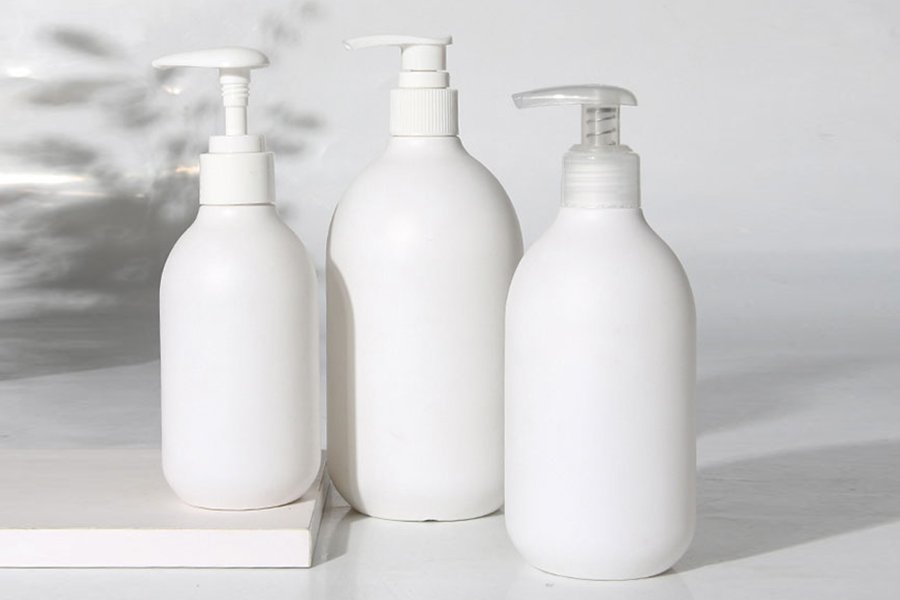
Opacifiers are widely used in liquid formulations, particularly products containing water and surfactants.
1. Shampoo
Opacifiers are commonly used when a shampoo is intended to have a milky or creamy appearance rather than being completely transparent.
The final dosage depends on the surfactant system, pH, fragrance, salt content and other ingredients.
2. Body Wash and Shower Gel
Body wash and shower gel can be formulated as clear, translucent or opaque products.
An opacifier can be used to convert a transparent or translucent formulation into a smooth, milky-looking product.
3. Liquid Hand Wash
An opacifying agent can be added to liquid hand wash when a white or cloudy appearance is preferred.
It should be tested together with the surfactants, fragrance, colorant, preservative and other ingredients used in the formulation.
4. Liquid Soap
Liquid soap formulations can also use an opacifier to create a creamy or milky appearance.
This is useful when the desired product design is different from a typical clear liquid soap.
5. Facial Cleanser
Opacifiers can be used in facial cleansing products when a creamy or opaque appearance is required.
Compatibility with the complete formulation should be checked, especially with surfactants, pH modifiers, preservatives and other additives.
6. Laundry Detergent
Liquid laundry detergents can be formulated with different appearances, including clear, translucent and opaque.
An opacifier can help produce a consistent milky appearance in suitable detergent systems.
7. Dishwashing Liquid
Some dishwashing liquid formulations are designed to have a cloudy or milky appearance.
An opacifier can be considered when the formulation needs to be less transparent.
8. Household Cleaners
Opacifiers can also be used in selected household and general-purpose liquid cleaners where an opaque appearance is required.
The suitability depends on the chemical composition and pH of the cleaner.
Recommended Opacifier Dosage
There is no single dosage that works for every formulation. The required amount depends on the type and concentration of the opacifier, as well as the formulation itself.
As a general starting point, a dosage of approximately:
0.1–1.0%
can be considered for formulation trials, depending on the specific grade.
A practical laboratory trial can start at:
- 0.2% – light opacity
- 0.5% – moderate opacity
- 0.8% – stronger opacity
- 1.0% – higher opacity
The actual optimum dosage should be determined through testing.
It is usually better to start with a lower dosage and increase gradually rather than adding a high amount immediately.
How to Calculate Opacifier Dosage
The calculation is straightforward:
Opacifier required = Total batch weight × Dosage (%) ÷ 100
For example, if you are making 100 kg of product and want to use 0.5% opacifier:
100 kg × 0.5 ÷ 100
= 0.5 kg
Therefore, you need 0.5 kg of opacifier for a 100 kg batch.
For a 1,000 kg batch:
1,000 kg × 0.5 ÷ 100
= 5 kg
Therefore, you would need 5 kg of opacifier.
Example of Opacifier Dosage Trial
If a liquid shampoo is currently too transparent, you can conduct a small laboratory trial using different dosage levels.
Ingredient | Sample A | Sample B | Sample C |
Existing formulation | 99.8% | 99.5% | 99.2% |
Opacifier | 0.2% | 0.5% | 0.8% |
Total | 100% | 100% | 100% |
Compare the samples after proper mixing.
If 0.5% already produces the desired appearance, there may be no need to increase the dosage to 0.8%.
This approach helps reduce unnecessary raw material usage while achieving the required appearance.
How to Add Opacifier Into a Formulation
The addition method depends on the specific type of opacifier. Always follow the technical recommendations for the selected grade.
A general approach is:
Step 1: Prepare the Main Formulation
Prepare the water, surfactants, thickener, preservative, fragrance and other ingredients according to the formulation.
Make sure the mixture is reasonably uniform before adding the opacifier.
Step 2: Check the pH
Check and adjust the formulation to the required pH range.
pH can affect the performance of some opacifier systems, so it should not be ignored.
Step 3: Add the Opacifier Gradually
Add the opacifier slowly while mixing.
Avoid adding the entire amount into one location. Gradual addition helps distribute the ingredient evenly throughout the formulation.
Step 4: Continue Mixing
Continue mixing until the product has a uniform appearance.
Check for:
- Uneven opacity
- Lumps
- Floating material
- Sedimentation
- Phase separation
Step 5: Evaluate the Final Product
After mixing, check the finished product for:
- Appearance
- Opacity
- pH
- Viscosity
- Stability
- Colour
- Fragrance
- Separation
Testing the complete formulation is important because other ingredients can change the final appearance.
Factors That Affect Opacifier Performance
The dosage is not the only factor that determines the final opacity.
pH
Different opacifiers have different pH compatibility ranges. A change in pH may affect their performance.
Surfactants
Anionic, nonionic, amphoteric, and other surfactants can interact differently with an opacifying system.
Salt and Electrolytes
Ingredients such as sodium chloride can affect the structure and appearance of surfactant-based products. This is especially important in shampoo, body wash, and dishwashing liquid.
Fragrance
Fragrance oils may affect the clarity or appearance of the formulation. Always evaluate the product after fragrance has been added.
Colorant
An opaque base can change how a colour appears. A colour that looks strong in a clear product may appear softer after opacification.
Viscosity
Very thick formulations may require more effective mixing to distribute the opacifier uniformly.
Common Mistakes When Using Opacifier
Using Too Much
Higher dosage does not always mean better results. Excessive use can increase cost and may affect the formulation.
Ignoring pH
Always consider the suitable pH range for the selected opacifier.
Poor Mixing
Insufficient mixing can result in uneven opacity or visible particles.
Testing Only the Base
Do not test the opacifier only in water or a simple base. Other ingredients such as surfactants, fragrance, salt and colorant can change its performance.
Assuming Every Opacifier Works the Same Way
Different opacifiers can have different chemical compositions, concentrations, processing requirements, and dosage recommendations.
Tips for Getting the Right Opacity
If the product is not opaque enough, do not immediately add a large amount of opacifier.
First check:
- Is the dosage suitable?
- Is the pH within the recommended range?
- Was the opacifier added correctly?
- Was it mixed sufficiently?
- Are the surfactants compatible?
- Is salt or another electrolyte affecting the formulation?
- Did the fragrance change the appearance?
- Is the selected opacifier suitable for the application?
Conducting several small trials is often the easiest way to find the optimum dosage.
Conclusion
An opacifier or opacifying agent is a useful ingredient for changing a clear or translucent liquid into a milky, cloudy or opaque formulation. It is commonly used in products such as shampoo, body wash, liquid soap, hand wash, laundry detergent, dishwashing liquid, and household cleaners.
A general dosage range of 0.1–1.0% can be used as a starting point for formulation development, depending on the specific opacifier grade. Starting with approximately 0.2–0.5% and adjusting based on the desired appearance can be a practical approach.
The final result depends not only on dosage but also on pH, surfactants, salt, fragrance, viscosity, mixing and overall formulation compatibility.
For best results, conduct a small-scale trial first and evaluate the complete formulation before moving to large-scale production.
For more information about the available Opacifier / Opacifying Agent, refer to the product page for product details and specifications.