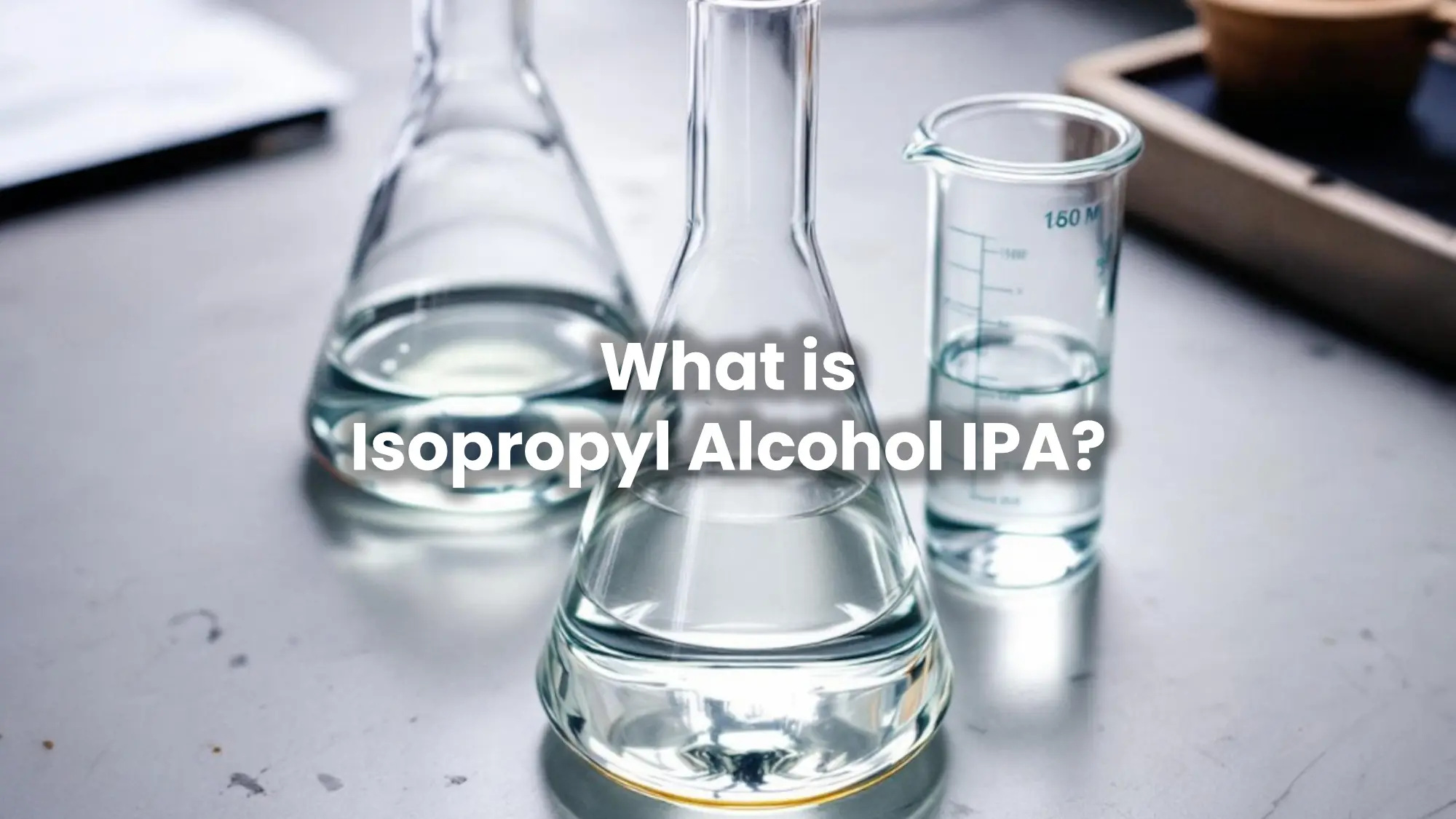
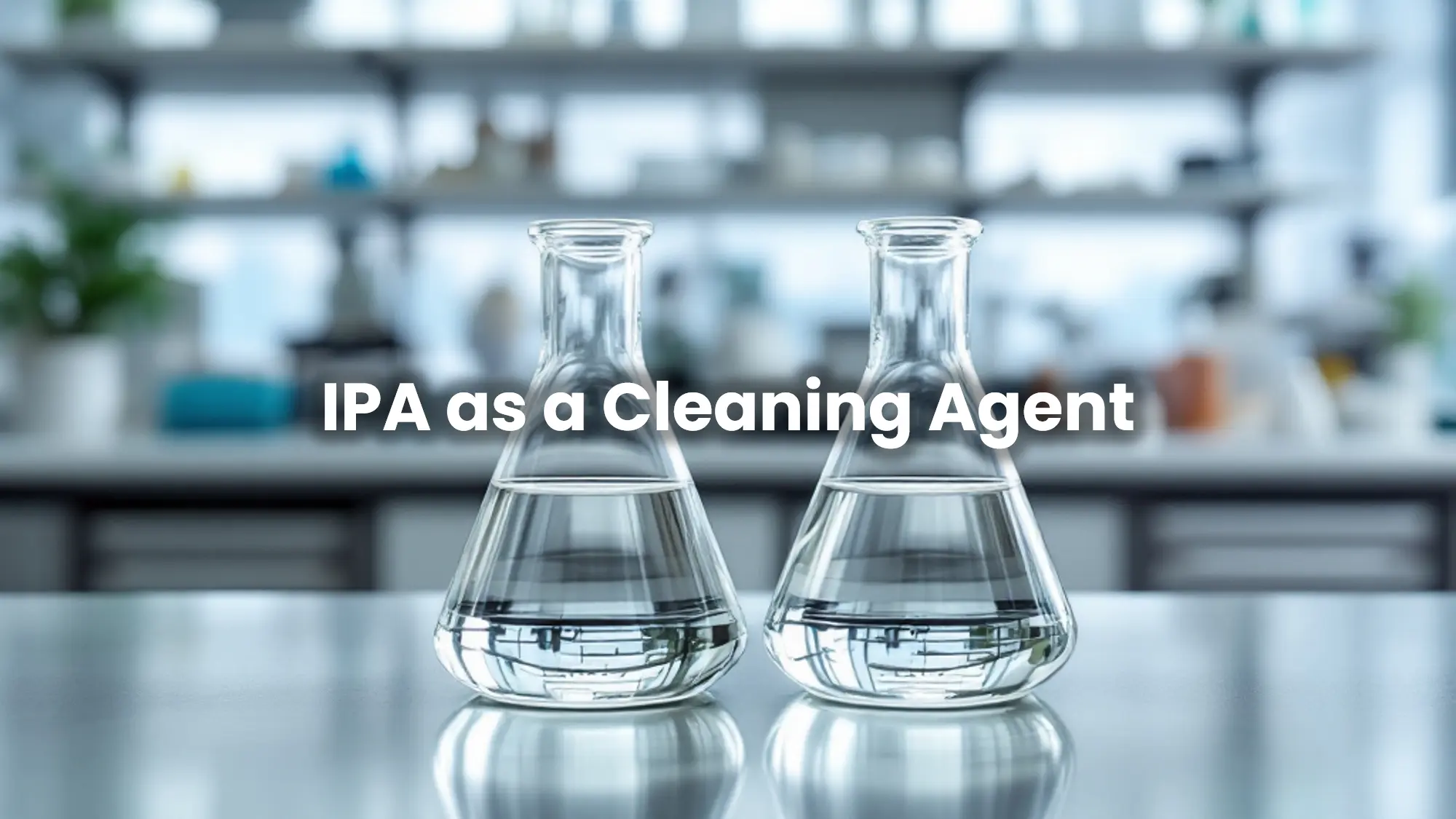
Isopropyl Alcohol (IPA), also known as isopropanol is one of the most widely used cleaning solvents in industrial, laboratory and general maintenance applications. It is well known for its strong cleaning performance, fast evaporation rate and wide material compatibility.
IPA is commonly used in electronics, manufacturing, automotive maintenance, laboratories and household cleaning.
Many users often ask:
- Why is IPA effective for cleaning?
- What concentration should be used?
- Can IPA damage plastic materials?
- Is it safe for sensitive equipment?
This article explains IPA in a simple and practical way for better understanding across different industries.
What is IPA (Isopropyl Alcohol)?
IPA is a colorless and flammable solvent with the chemical formula C₃H₈O. It belongs to the alcohol family and is widely used as an industrial cleaning agent.
IPA is capable of dissolving oils, grease and many organic contaminants. It evaporates quickly at room temperature and generally leaves minimal residue on surfaces.
These characteristics make IPA suitable for applications where fast drying and cleanliness are required.
Why IPA is an Effective Cleaning Agent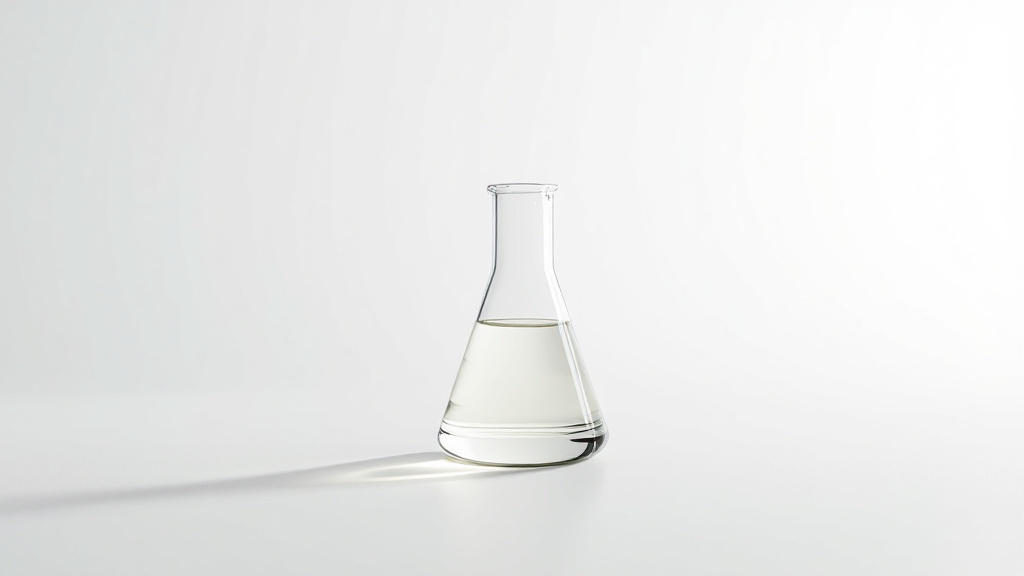
Strong Solvent Performance
IPA is able to dissolve a wide range of contaminants such as:
- Oil and grease
- Fingerprints
- Wax residues
- Adhesive residues
- Flux residues in electronics
- Ink stains
This makes it useful for both industrial and general cleaning tasks.
Fast Drying Property
IPA evaporates quickly at room temperature. This helps reduce waiting time after cleaning and lowers the risk of moisture remaining on sensitive surfaces.
Low Residue After Cleaning
High purity IPA leaves very little residue after evaporation. This is especially important for electronics, optical components and precision instruments.
Water Miscibility
IPA mixes completely with water, allowing different concentrations to be prepared depending on the cleaning requirement.
Common IPA Concentrations and Their Uses
In the market, IPA is commonly available in 75% and 99.9% concentrations. Each grade serves different cleaning purposes.
75% IPA
75% IPA contains approximately 75% isopropyl alcohol and 25% water.
The water content slightly slows evaporation and increases surface contact time during cleaning. This makes it suitable for general-purpose cleaning.
Common applications include:
- General surface cleaning
- Laboratory bench cleaning
- Household cleaning tasks
- Light grease and dirt removal
- Cleaning tools and work surfaces
This grade is commonly used when moderate cleaning strength and longer contact time are preferred.
99.9% IPA
99.9% IPA is a high-purity grade with extremely low water content.
It evaporates very quickly and leaves almost no moisture behind. This makes it suitable for sensitive and precision applications.
Common applications include:
- Cleaning electronic components (PCB, circuit boards)
- Optical equipment cleaning
- Precision instruments
- Industrial degreasing
- Moisture removal from sensitive parts
This grade is preferred when fast drying and minimal water exposure are required.
Which IPA Should Be Used?
- 75% IPA is suitable for general cleaning and routine maintenance
- 99.9% IPA is suitable for electronics, precision tools and fast-drying applications
Proper selection helps improve cleaning efficiency and protect materials.
How IPA Removes Dirt and Oil
Most dirt and contamination in industrial and household environments contain oil-based substances.
Water alone is not able to break down these oils effectively.
IPA dissolves oil and grease, allowing contaminants to be easily wiped away from surfaces.
For example, fingerprints on glass contain natural skin oils. IPA breaks down these oils so the surface becomes clean and clear again.
Applications of IPA as a Cleaning Agent
Electronics Industry
IPA is widely used for cleaning:
- Printed circuit boards (PCB)
- Electronic assemblies
- Connectors and sensors
- Precision electronic tools
It helps remove flux residues, dust, fingerprints and oil contamination.
Laboratory Use
IPA is commonly used to clean:
- Glassware
- Laboratory instruments
- Work surfaces
It helps maintain cleanliness without leaving interfering residues.
Manufacturing Industry
IPA is used for:
- Cleaning machine parts
- Degreasing metal surfaces
- Preparing surfaces before assembly
Clean surfaces improve consistency and reduce defects in production.
Automotive Industry
IPA is used for:
- Cleaning sensors and components
- Removing polishing compounds
- Surface preparation before coating
It helps improve adhesion performance of coatings and treatments.
Printing Industry
IPA is used to remove:
- Ink residues
- Dust and grease
This helps maintain stable printing quality.
Household Cleaning
IPA can also be used for:
- Glass cleaning
- Removing adhesive and sticker residue
- Cleaning stainless steel surfaces
- Cleaning electronic devices such as keyboards and screens
Advantages of IPA
- Fast evaporation
- Strong cleaning performance on oils and grease
- Low residue after use
- Easy application
- Wide industrial compatibility
Limitations of IPA
IPA also has some limitations:
- Less effective on heavy carbon or thick deposits
- Highly flammable and requires careful handling
- May affect certain plastics, coatings or rubber materials
- Requires proper storage and ventilation
Will IPA Damage Plastic Bottles?
The effect of IPA on plastic bottles depends on the type of plastic used.
IPA can damage certain plastic materials when used improperly, especially if the plastic is old, brittle or sensitive.
Risk factors include:
- High concentration exposure
- Long contact or soaking time
- Repeated cleaning cycles
- Strong mechanical rubbing
- Aging or weakened plastic structure
Possible effects may include:
- Surface dullness
- Cloudiness
- Cracking
- Discoloration
- Reduced mechanical strength
Different plastic types react differently to IPA, so compatibility is not always the same.
Important Disclaimer
Plastic compatibility with IPA depends on material type, concentration, exposure time, temperature and product condition. A small compatibility test is recommended before full-scale use. The information provided serves as general guidance and does not guarantee performance across all plastic materials.
Best Practices When Using IPA
- Select the correct concentration based on application
- Avoid long soaking on plastic materials
- Use gentle wiping instead of strong scrubbing
- Ensure proper ventilation during use
- Store in tightly sealed containers away from heat
Safety Considerations
- IPA is highly flammable
- Avoid exposure to open flames or sparks
- Use in well-ventilated areas
- Wear protective gloves when necessary
- Store in a cool and dry place
Frequently Asked Questions (FAQ)
Can IPA be diluted?
Yes. IPA can be diluted with water depending on application requirements.
Does IPA leave residue?
High purity IPA generally leaves minimal residue when used correctly.
Can IPA remove grease?
Yes. IPA is effective in dissolving oil and light grease.
Which IPA is best for electronics?
99.9% IPA is preferred due to its low water content and fast evaporation.
Which IPA is best for general cleaning?
75% IPA is suitable for general cleaning and surface maintenance.
Can IPA Be Used to Clean a Derma Roller?
Yes. 75% IPA is commonly used to clean and disinfect derma rollers and other personal care tools. The roller is typically soaked for several minutes before being allowed to air dry. IPA helps reduce microbial contamination on the surface, but it does not provide the same level of sterility as professional sterilization methods.
Conclusion
IPA remains one of the most widely used cleaning solvents across multiple industries due to its strong cleaning ability, fast drying nature and low residue characteristics.
With 75% IPA and 99.9% IPA, users can select the most suitable grade depending on the cleaning requirement.
75% IPA is commonly used for general cleaning, while 99.9% IPA is preferred for electronics and precision applications where fast drying and low moisture are important.
When applied correctly, IPA provides a reliable and efficient cleaning solution for both industrial and everyday use.