Bad odours are a common problem in homes, commercial buildings and industrial environments. Whether the smell comes from food waste, sweat, pets, drains, smoke or damp areas, many people experience the same problem: the unpleasant smell disappears temporarily but returns after a few hours or days.
Why does this happen? Is it because the air freshener is not strong enough or is there something more complicated happening?
The answer lies in the difference between masking an odour and neutralising it.
Understanding how bad odours form, why they return and how odour neutralisers work can help us choose a more effective approach to odour control.
What Causes Bad Odours?
Bad odours are mainly caused by chemical compounds released into the surrounding air. Many of these substances are volatile compounds, meaning they can evaporate easily and spread through the air.
When these compounds reach our nose, they interact with olfactory receptors, which detect smells and send signals to the brain.
Different sources produce different types of odorous compounds:
- Food waste: Decomposing food releases sulphur compounds, organic acids and other volatile substances.
- Sweat and body odour: Bacteria break down substances on the skin, producing unpleasant-smelling compounds.
- Toilets and sewage: Ammonia and hydrogen sulphide can contribute to strong unpleasant smells.
- Pets: Urine and organic residues can produce persistent odours.
- Damp areas: Microbial growth and moisture-related decomposition can create musty smells.
- Smoke: Smoke contains various volatile compounds and particles that can leave lingering odours.
Not all bad odours have the same chemical composition. This is why one odour-control product may work well in one situation but produce limited results in another.
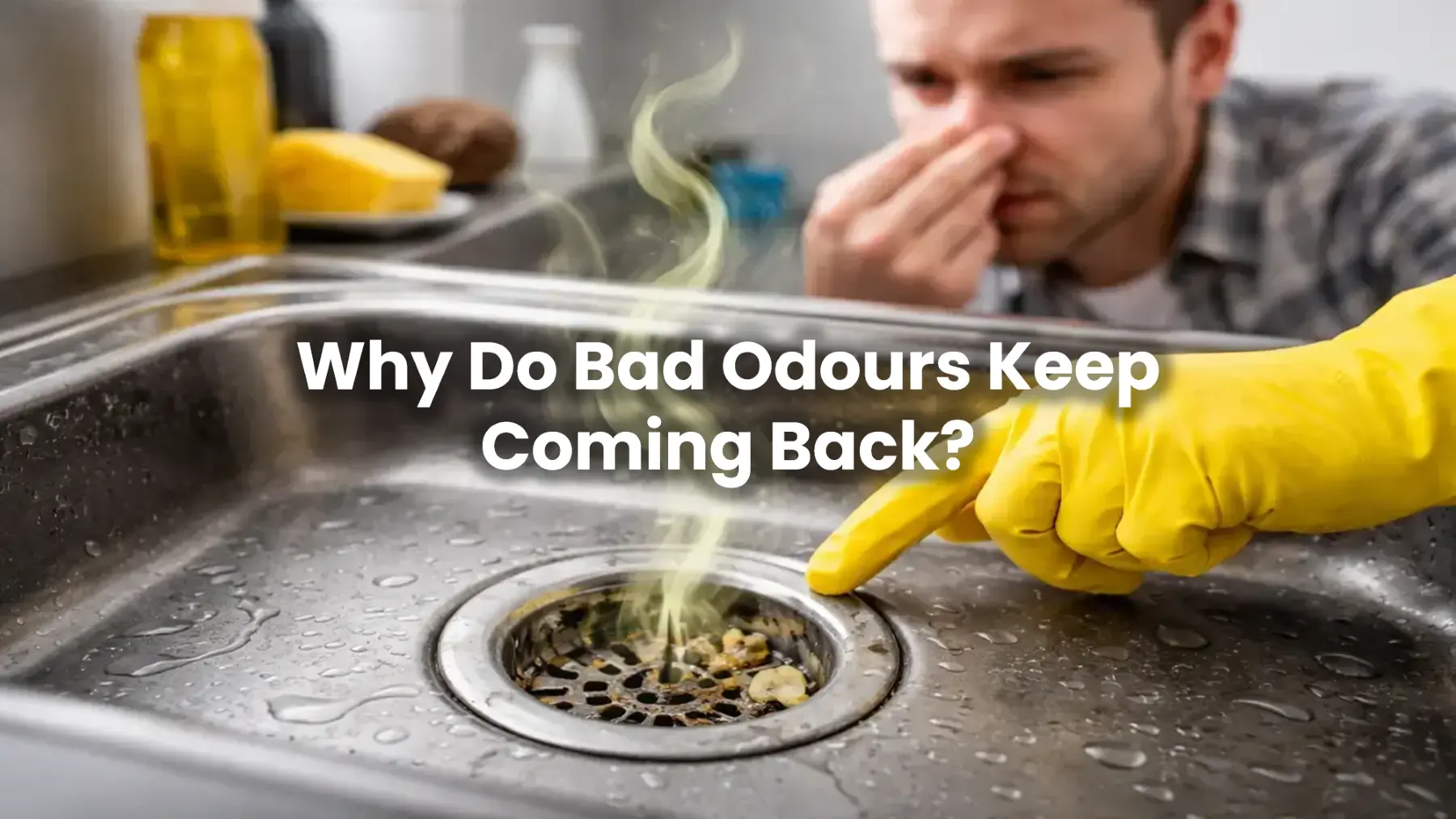
Why Do Bad Odours Keep Coming Back?
One common problem with odour control is that the smell disappears temporarily but returns later. This usually happens when the treatment addresses the smell in the air without dealing with the original source.
A. The Odour Source Has Not Been Removed
Imagine a rubbish bin containing leftover food. Spraying an air freshener around the bin may temporarily improve the smell, but the food continues to decompose and release unpleasant compounds.
As long as the source remains active, new odours will continue to develop.
B. Odour Molecules Remain on Surfaces
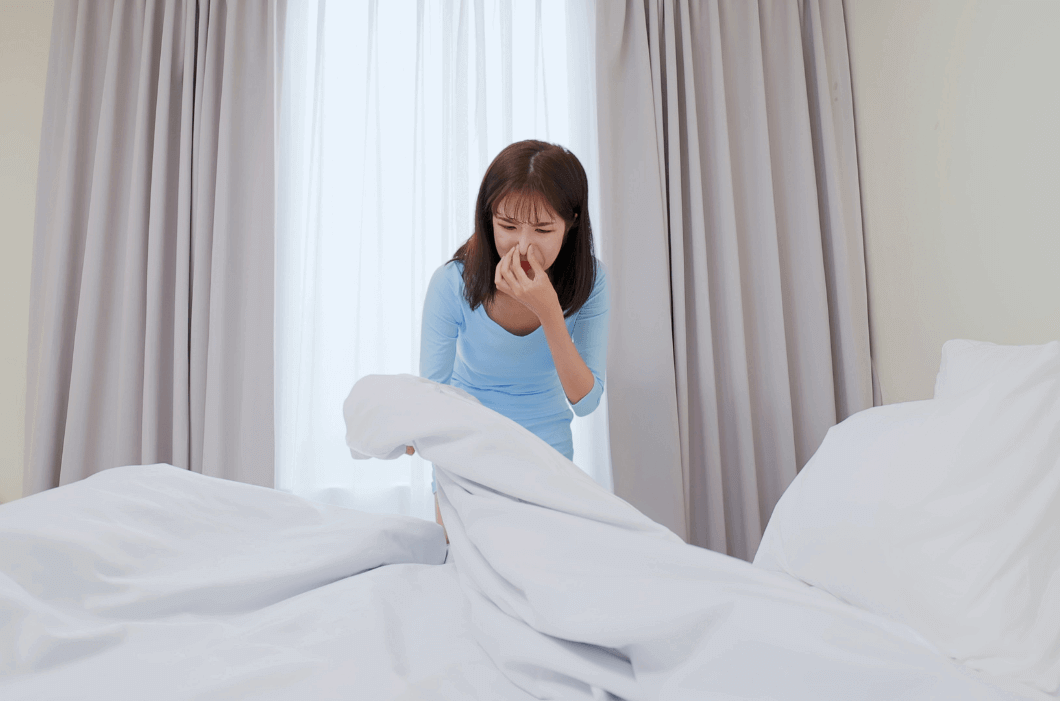
Odorous substances can attach to or become trapped in porous materials such as carpets, curtains, mattresses, clothing and upholstery.
These materials may slowly release the trapped compounds back into the surrounding air, causing the unpleasant smell to return.
C. Fragrances Only Cover the Unpleasant Smell
Many conventional air fresheners release pleasant-smelling fragrance compounds into the air.
However, the original odour molecules may still be present. For example, spraying a floral air freshener in a room with a strong sewage smell may create a mixture of floral and unpleasant smells rather than eliminate the original problem.
D. The Odour Source Continues Producing New Compounds
Some sources, such as drains, waste storage areas and pet areas, continuously produce odorous substances.
Even if the existing smell is reduced, new compounds may be released if the underlying source is not properly managed.
What Is the Difference Between Masking and Neutralising Bad Odours?
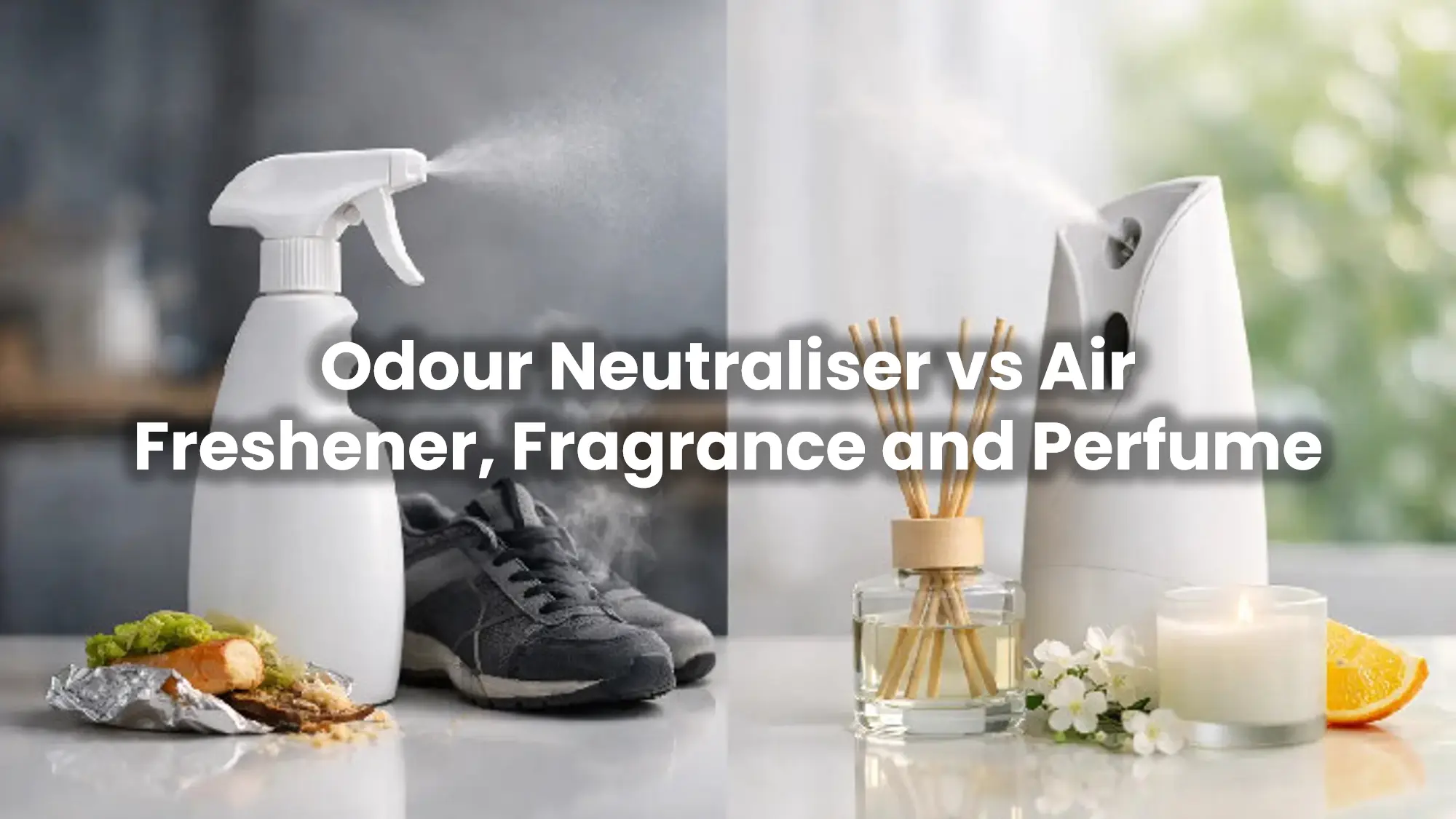
Although air fresheners and odour neutralisers both improve the smell of an environment, they work differently.
Odour Masking
Odour masking involves introducing a pleasant fragrance to cover or reduce the perception of an unpleasant smell.
For example, a citrus air freshener releases fragrance compounds that change the overall smell of a room. However, the original odour molecules may remain present.
Odour Neutralisation
Odour neutralisation focuses on reducing the presence or impact of compounds responsible for unpleasant smells.
Depending on the formulation, an odour neutraliser may trap, bind, absorb or chemically react with certain odorous substances. The objective is to reduce their ability to produce an unpleasant smell.
Feature | Air Freshener | Odour Neutraliser |
Main purpose | Introduces pleasant fragrance | Reduces unpleasant odours |
Working principle | Masks or changes the overall smell | Interacts with odorous compounds |
Fragrance | Usually contains fragrance | May be fragranced or fragrance-free |
Odour source | May remain unaffected | Targets odorous compounds |
Some products combine both functions, helping to reduce unpleasant odours while leaving a pleasant fragrance.
How Does an Odour Neutraliser Work?
An odour neutraliser is designed to interact with unpleasant-smelling compounds and reduce their ability to produce an unwanted smell.
The exact mechanism depends on its active ingredients and formulation. Common mechanisms include:
A. Odour Trapping and Binding
Some odour neutralisers contain active components that interact with odorous substances through trapping or binding.
These interactions can reduce the amount of free odour molecules available to enter the surrounding air and reach our nose.
B. Chemical Neutralisation
Certain odour-causing compounds can be reduced through chemical reactions.
For example, some unpleasant smells are associated with acidic or alkaline substances. Suitable neutralising agents can react with these compounds and form different substances with lower odour intensity.
The effectiveness depends on the chemical properties of the odour and the neutralising agent.
C. Odour Absorption and Adsorption
Some materials can capture odorous compounds through absorption or adsorption.
Activated carbon is a common example. It has a highly porous structure with a large surface area that allows certain gaseous compounds to attach to its surface.
The difference is:
- Absorption: A substance enters and becomes distributed within another material.
- Adsorption: A substance attaches to the surface of another material.
D. Encapsulation
Some odour-control technologies use encapsulation to surround or contain odorous substances within a structure. This can reduce the release of certain compounds into the air, depending on the technology used.
How Does a Liquid Odour Neutraliser Work?
Liquid odour neutralisers are commonly used in household, commercial and industrial applications.
Depending on the formulation, they can be applied directly to suitable surfaces or diluted with water before application.
A typical application process involves the following steps:
Step 1: Identify the Odour Source
Determine where the unpleasant smell originates. It may come from rubbish bins, pet areas, drains, carpets or other surfaces.
Identifying the source helps determine the most suitable treatment method.
Step 2: Dilute the Product if Required
Some concentrated liquid odour neutralisers need to be diluted with water.
For example, a 1% dilution may be used as an initial reference when recommended by the product instructions. The required concentration depends on the formulation and intended application.
Step 3: Apply to the Affected Area
Apply the prepared solution using a suitable spray bottle or other application equipment.
For surface-related odours, ensure the solution reaches the affected area where odorous substances may remain.
Step 4: Allow Sufficient Contact Time
Allow sufficient time for the active components to interact with the odorous compounds. The required contact time depends on the formulation and application method.
Step 5: Repeat if Necessary
Strong or persistent odours may require additional applications. However, repeated treatment should not replace proper cleaning and removal of the original source.
Where Can Odour Neutralisers Be Used?
Odour neutralisers have applications across different industries and environments.
Household Applications
- Rubbish bins and waste storage areas
- Kitchens and bathrooms
- Pet areas
- Carpets and upholstery
- Shoes and other odour-prone items
Commercial Applications
- Hotels and accommodation facilities
- Restaurants and food preparation areas
- Offices and shopping centres
- Public toilets
- Laundry facilities
Automotive Applications
- Car interiors
- Floor mats and fabric seats
- Boot compartments
- Suitable vehicle air-conditioning applications
Industrial Applications
- Waste handling facilities
- Wastewater treatment areas
- Storage facilities
- Manufacturing environments
- Commercial cleaning operations
The product must be suitable for the intended surface and application method.
Why Is Removing the Odour Source Still Important?
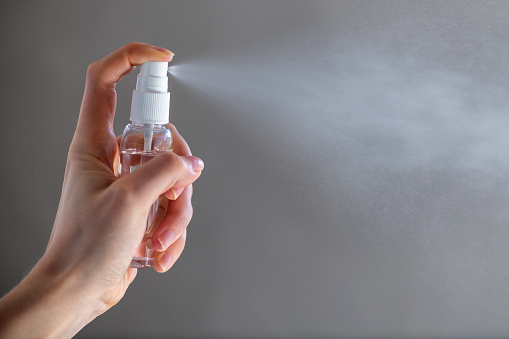
Although odour neutralisers can help reduce unpleasant smells, they should not replace proper cleaning and hygiene practices.
For example, if a rubbish bin contains decomposing food, an odour neutraliser may reduce the smell, but the waste can continue producing new odorous compounds.
A better approach is to:
- Remove the waste or material responsible for the smell.
- Clean the affected surface to remove organic residues.
- Allow the area to dry when appropriate.
- Apply a suitable odour neutraliser to address residual odours.
- Maintain proper ventilation and regular cleaning.
This approach addresses both the source and the remaining odorous compounds.
What Factors Affect the Effectiveness of an Odour Neutraliser?
The performance of an odour neutraliser depends on several factors.
- Type of odour: Different odours contain different chemical compounds. A formulation effective against one type may be less effective against another.
- Concentration: Excessive dilution may reduce effectiveness, while using more product does not automatically guarantee better results.
- Contact time: The active components need sufficient time to interact with odorous substances.
- Surface type: Porous materials such as carpets and upholstery may retain odours more deeply than smooth surfaces.
- Environmental conditions: Temperature, humidity and airflow can influence how quickly odorous compounds are released into the air.
Understanding these factors helps users select suitable products and application methods.
Common Mistakes When Treating Bad Odours
Some common mistakes can reduce the effectiveness of odour-control treatments:
- Using fragrance alone to cover a strong unpleasant smell.
- Ignoring the original source of the odour.
- Using an incorrect dilution ratio.
- Applying the product to unsuitable surfaces.
- Not allowing sufficient contact time.
- Ignoring ventilation and regular cleaning.
Correct product selection and application are important for achieving better odour-control results.
Frequently Asked Questions (FAQ)
Q1: Does an odour neutraliser remove bad smells completely?
An odour neutraliser can significantly reduce certain unpleasant smells by interacting with odorous compounds. However, results depend on the formulation, type of odour and application method. Removing the original source is also important.
Q2: Can an odour neutraliser work without fragrance?
Yes. Fragrance is not essential for odour neutralisation. The main function is to reduce unpleasant odours rather than introduce another smell.
Q3: Can I mix an odour neutraliser with an air freshener?
Some products can be used alongside fragrances, but compatibility should be checked first. Mixing different products without testing may affect stability and performance.
Q4: Is an odour neutraliser the same as a disinfectant?
No. An odour neutraliser is designed to reduce unpleasant smells, while a disinfectant is designed to inactivate or kill certain microorganisms. Some products may offer both functions, depending on their formulation and testing.
Conclusion
Bad odours keep coming back mainly because the compounds responsible for the smell, or the materials producing them, have not been properly addressed.
Simply introducing a pleasant fragrance may temporarily improve the smell of an environment, but it does not necessarily reduce the original odour-causing compounds.
An odour neutraliser offers a different approach by interacting with these compounds through mechanisms such as trapping, binding, absorption or chemical neutralisation.
Understanding the difference between masking and neutralising is important when choosing an appropriate odour-control solution. Combined with proper cleaning, source removal and suitable application methods, odour neutralisers can help maintain fresher and more comfortable environments in household, commercial and industrial settings.