
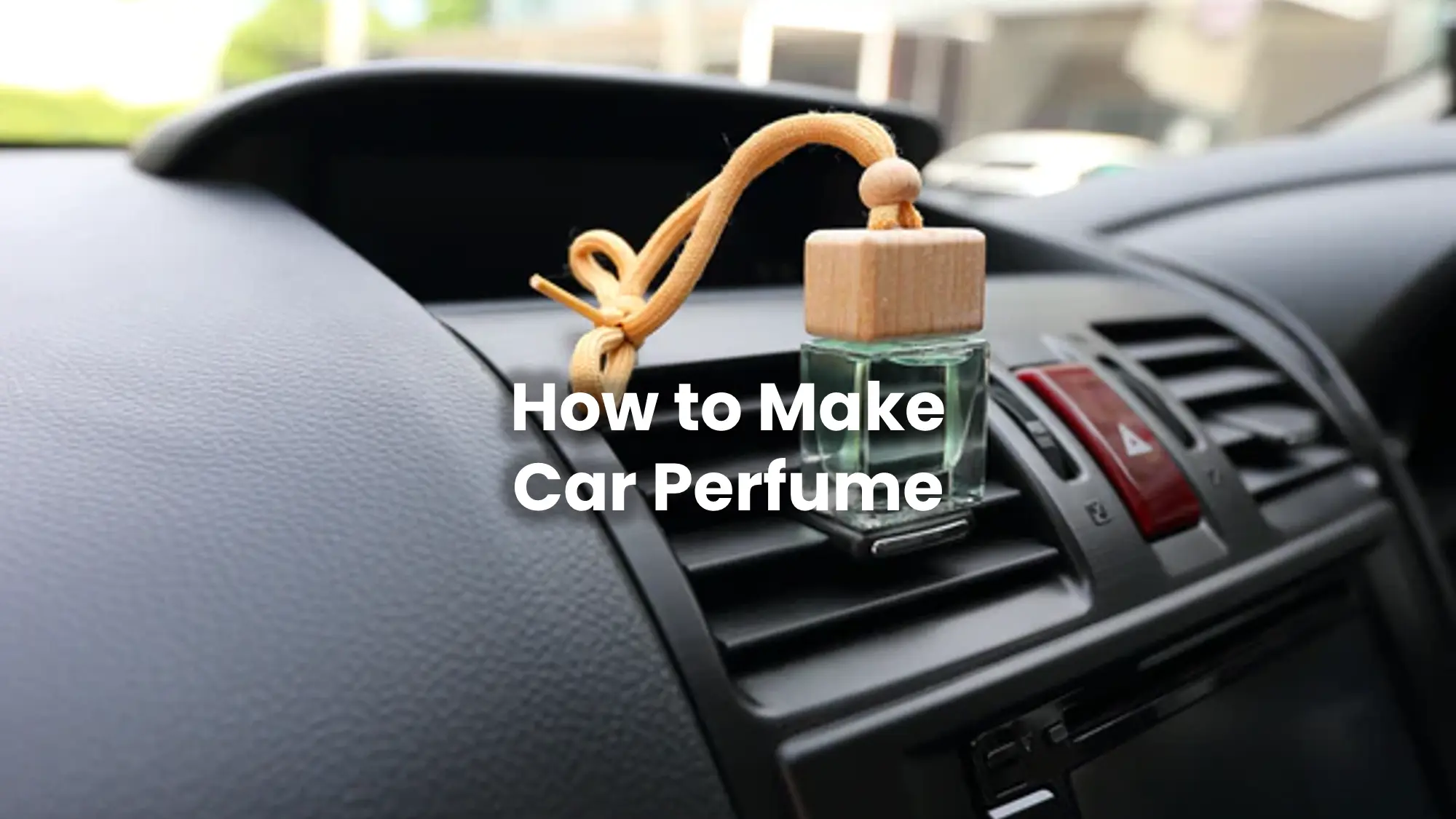
Car perfume is a simple fragrance product designed to keep a vehicle smelling fresh and pleasant. It can be made in different forms, including hanging bottles, vent clips, spray types and small refill bottles.
One of the important parts of making car perfume is choosing a suitable carrier or solvent. The carrier helps dissolve the fragrance oil and allows the fragrance to evaporate gradually. In this formulation, Dipropylene Glycol Methyl Ether (DPM) is used together with perfume grade ethanol to create a balanced car perfume formula.
This article explains how to make car perfume using the following formulation:
Ingredient | Recommended Range |
Fragrance Oil | 20–30% |
DPM | 40–60% |
Perfume Grade Ethanol | 20–30% |
Fixative | Optional |
Colorant | Optional |
Total | 100% |
The exact percentage can be adjusted depending on the fragrance oil, desired fragrance strength, evaporation rate and type of car perfume packaging.
What Is DPM and Why Is It Used in Car Perfume?
DPM stands for Dipropylene Glycol Methyl Ether. It is a solvent commonly used in fragrance, cleaning, coating and other industrial applications.
In car perfume, DPM acts as a carrier for the fragrance oil. It helps the fragrance oil mix evenly and supports controlled evaporation.
Compared with using fragrance oil alone, adding a suitable carrier can make the product easier to formulate and can help provide a more controlled release of fragrance.
DPM is particularly useful when making products such as:
- Car perfume
- Reed diffuser
- Air freshener
- Room fragrance
- Fragrance diffuser products
The amount of DPM can be adjusted depending on the desired performance of the finished product.
Why Use Perfume Grade Ethanol?
Perfume grade ethanol is used to help dissolve and distribute fragrance materials while also providing faster evaporation.
Ethanol evaporates relatively quickly compared with DPM. This can help the fragrance become noticeable after the car perfume is exposed to air.
The combination of DPM + ethanol gives the formulation two different evaporation characteristics:
- Ethanol: Faster evaporation and quick fragrance release
- DPM: Slower evaporation and more controlled fragrance release
This combination can therefore provide a more balanced fragrance experience.
However, too much ethanol may cause the product to evaporate too quickly, especially in a hot vehicle. This is one reason why DPM is included at a higher percentage in this formulation.
What Is the Role of Fragrance Oil?
Fragrance oil provides the main scent of the car perfume.
The recommended amount in this formulation is 20–30%.
For a stronger fragrance, the formulation can start closer to 30%. For a lighter fragrance, 20% may be sufficient.
However, fragrance strength is not determined by concentration alone. Different fragrance oils have different characteristics. Some fragrances naturally smell stronger than others, while some may evaporate faster or slower.
For this reason, it is useful to test the finished product before deciding on the final percentage.
What Is the Role of Fixative?
A fixative is optional in this formulation.
A fragrance fixative may be used to help slow down the evaporation of certain fragrance components and support longer-lasting fragrance performance.
If a fixative is used, the amount should be determined based on the specific fixative and fragrance oil being used. It is important to account for the fixative within the total 100% formulation.
For example, if 0.5% fixative is added, the amount of DPM or ethanol should be reduced accordingly so that the total formula remains 100%.
What Is the Role of Colorant?
Colorant is also optional.
A small amount of suitable oil-soluble or solvent-compatible colorant can be added to give the car perfume a more attractive appearance.
Only a small amount is normally required. Excessive colorant can make the product too dark and may cause staining if the liquid comes into contact with unsuitable surfaces.
Always check that the selected colorant is compatible with the fragrance oil and solvent system.
Example Formula for 1 kg of Car Perfume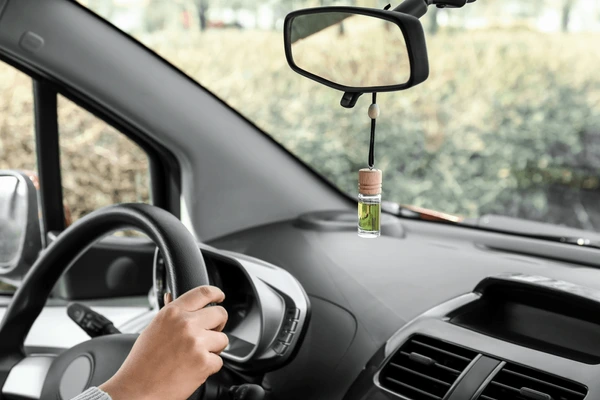
The following is an example using the middle range of the recommended formulation:
Ingredient | Percentage | Amount for 1 kg |
Fragrance Oil | 25% | 250 g |
DPM | 50% | 500 g |
Perfume Grade Ethanol | 25% | 250 g |
Total | 100% | 1,000 g |
This is a starting formulation. The percentages can be adjusted after testing the fragrance strength and evaporation performance.
For example, a stronger fragrance formulation could use:
- Fragrance oil: 30%
- DPM: 45%
- Perfume grade ethanol: 25%
For a lighter fragrance:
- Fragrance oil: 20%
- DPM: 55%
- Perfume grade ethanol: 25%
The final formulation should always total 100%.
How to Make Car Perfume Step by Step
Step 1: Prepare the Equipment
Prepare a clean and dry mixing container, weighing scale, stirrer and suitable storage bottle.
Avoid introducing water into the formulation unless the formulation has specifically been designed to contain water. Water can affect clarity and compatibility between the fragrance and solvent system.
For small batches, accurate weighing is important. A digital weighing scale is preferred because the ingredients are normally measured by weight.
Step 2: Add the DPM
Start by adding the required amount of DPM into the mixing container.
For the 1 kg example above, add 500 g of DPM.
DPM provides the main carrier system and helps prepare the fragrance oil for mixing with the other ingredients.
Mix gently to avoid unnecessary air bubbles.
Step 3: Add the Fragrance Oil
Slowly add 250 g of fragrance oil to the DPM while stirring.
Continue mixing until the fragrance oil is evenly distributed.
Adding the fragrance oil gradually can make mixing easier, especially when working with thicker or more viscous fragrance oils.
At this stage, observe the mixture carefully. A suitable fragrance and solvent combination should form a uniform mixture.
Step 4: Add Fixative if Required
If a fixative is being used, add it after the fragrance oil has been incorporated.
For example, if using 0.5% fixative, add 5 g of fixative to a 1 kg batch.
The other ingredients must then be adjusted so the total remains 1,000 g.
Mix until the fixative is evenly distributed throughout the formulation.
Step 5: Add Perfume Grade Ethanol
Slowly add the required amount of perfume grade ethanol while stirring.
For the basic 1 kg example, add 250 g of perfume grade ethanol.
Ethanol should be handled carefully because it is highly flammable. Work in a well-ventilated area and keep the product away from ignition sources.
Mix gently until the formulation becomes uniform.
Step 6: Add Colorant if Required
If color is desired, add a very small amount of compatible colorant.
It is better to start with a low amount and gradually increase it until the desired shade is achieved.
Adding too much colorant may affect the appearance of the product and can increase the risk of staining.
Step 7: Allow the Mixture to Settle
After mixing, allow the car perfume to rest before filling the final packaging.
This allows trapped air bubbles to disappear and gives you an opportunity to check the product's appearance.
Check for:
- Cloudiness
- Separation
- Sediment
- Unusual colour changes
- Undissolved material
- Excessive bubbles
If the formulation becomes cloudy or separates, the fragrance and solvent combination may require adjustment.
Step 8: Conduct a Performance Test
Before producing a large quantity, test a small batch.
Place the finished car perfume into the intended car perfume bottle and observe its performance.
Consider the following questions:
Is the fragrance strong enough?
If the fragrance is too weak, the fragrance oil percentage may need to be increased within the recommended range.
Does the fragrance disappear too quickly?
The balance between ethanol, DPM and fragrance oil may need adjustment.
Does the product remain stable?
Check whether the formulation remains clear and uniform after storage.
Does the bottle release the fragrance properly?
The packaging can have a major effect on fragrance evaporation. The same formulation may perform differently in different types of car perfume bottles.
How to Adjust the Formula for Different Fragrance Strengths
The fragrance oil percentage can be adjusted according to the desired result.
Fragrance Oil | DPM | Ethanol | General Direction |
20% | 55% | 25% | Lighter fragrance |
25% | 50% | 25% | Balanced starting point |
30% | 45% | 25% | Stronger fragrance |
These percentages are starting points rather than fixed requirements. Different fragrance oils can produce different results at the same concentration.
For example, a strong fragrance may perform well at 20–25%, while a lighter fragrance may require a higher concentration.
Important Factors That Affect Car Perfume Performance
The formulation is only one part of the finished product. Several other factors can affect performance.
Fragrance Oil Type
Different fragrance oils have different evaporation characteristics and fragrance strength.
Temperature
Cars can become very hot, especially when parked under direct sunlight. Higher temperatures can increase evaporation.
Bottle Design
A hanging bottle, vent diffuser or other packaging design can release fragrance at different rates.
Opening Size
A larger opening generally allows more liquid and fragrance to evaporate. A smaller opening can provide slower release.
Storage
Keep the finished product in a suitable closed container away from excessive heat and direct sunlight before use.
Common Problems When Making Car Perfume
The product becomes cloudy
This may be caused by poor compatibility between the fragrance oil and solvent system. Try a small test batch first before large-scale production.
The product separates
Separation can indicate incompatibility or insufficient mixing. Check the fragrance oil, solvent ratio and other additives.
The fragrance is too weak
Consider increasing the fragrance oil concentration within the recommended range.
The fragrance evaporates too quickly
A lower ethanol level and higher DPM level may provide a slower evaporation profile, depending on the fragrance and packaging.
The fragrance is too strong
Reduce the fragrance oil concentration or adjust the carrier ratio.
Final Thoughts
Making car perfume does not require a complicated formulation, but the balance between fragrance oil, DPM and ethanol is important. A practical starting point is 25% fragrance oil, 50% DPM and 25% perfume grade ethanol.
The formulation can then be adjusted according to fragrance strength, evaporation rate, packaging and the desired user experience. Fixative and colorant can also be added when required, but they should be included within the total 100% formulation.
Most importantly, always conduct a small-scale stability and performance test before moving to larger production. A formulation that looks good immediately after mixing may perform differently after storage or when used in an actual vehicle.